
High-Performance Fasteners Partnership FAQ: Custom Sizes, Material Selection & Long-Term Supply
High-Performance Fasteners Partnership FAQ: Custom Sizes, Material Selection & Long-Term Supply
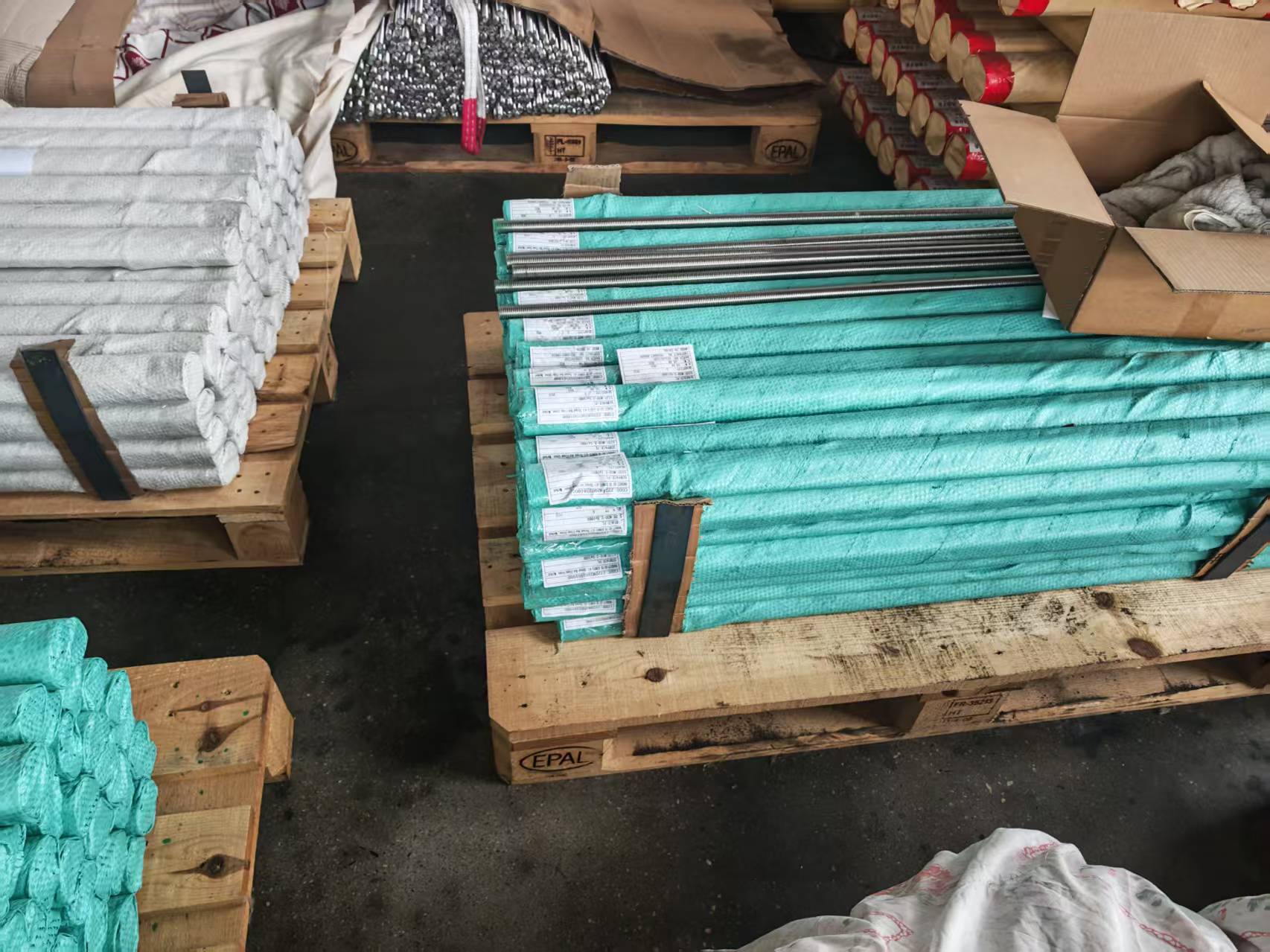
A fastener supplier is easy to buy from once. A fastener partner has to keep the same specification, the same material grade and the same acceptance standard in place across years of repeat orders — and that is a qualification decision, not a price decision. This FAQ answers the questions industrial buyers actually raise at that stage: full size customization, material selection across 304/316 stainless, duplex and nickel-based high-temperature alloys, compliance with ISO, DIN, ASTM, ASME, ANSI and JIS standards, purchasing terms, acceptance criteria, surface treatment options and the after-sales support expected on ongoing supply.
UHC Group (Jiaxing Union Hardware Co., Ltd.) is a stainless steel products supplier founded in 2017 in Jiaxing, Zhejiang, China. It operates five production bases — washers, bolts and nuts, screws, studs and rivets, and hardware products — and exports about 80% of its output to the EU, Korea and Japan. The answers below combine UHC's published capability facts with publicly available market and standards data, so each answer can be checked against its source.
The Decision Problem: What Breaks After the First Order
A long-term fastener partnership holds together when four things are fixed before the first serial order: the size envelope, the material-to-working-condition mapping, the acceptance criteria, and the rules for changes and after-sales support. Most supply failures trace back to one of those four being left open.
Fastener complaints rarely originate in a single bad batch. They originate in definition drift between order one and order ten. The recurring failure points look like this:
- Size coverage closes down. A size that was available for a trial order may not be repeatable at the same dimension and thread tolerance six months later, particularly when the part sits at the edge of a catalogue range.
- Material gets substituted quietly. A 304 part is supplied where 316L was intended, or an alloy grade is swapped for a visually identical one, because the working condition was never written into the specification.
- The governing standard is ambiguous. ISO, DIN, ASTM, ASME, ANSI and JIS describe similar parts under different dimensional and material rules; if the drawing does not state which family governs, supplier and buyer can both be technically correct and still disagree.
- Acceptance is undefined. Without an agreed test scope and documentation package, the argument at goods-in becomes a matter of opinion rather than a pass or fail against a criterion.
- Finish drifts. Natural finish, passivation, Dacromet and adhesive pre-coating are not interchangeable, and an unstated finish on the purchase order invites a substitution that fails in service rather than at inspection.
- Traceability breaks. Without a batch-level record from raw material to delivery, a field failure cannot be traced back to a heat number or a process change.
- After-sales has no owner. Replacement, credit and investigation routes are decided after the problem instead of before the contract.
Industry Background: Why Buyers Are Moving to Contracted Fastener Supply
The commercial context explains why buyers increasingly negotiate fastener supply as a multi-year relationship rather than a series of spot purchases. The global industrial fasteners market was valued at USD 103.9 billion in 2025 and is projected to reach USD 153.7 billion by 2033, according to Grand View Research. The same source reports that Asia Pacific held a 45.1% revenue share of that market in 2025, that metal fasteners accounted for 91.0% of the market, and that externally threaded fasteners — bolts and screws — represented 48.1% of global revenue. For buyers, that structure means the supply base is deep and competitive; the differentiator is not availability but repeatability.
Demand-side signals point the same way. Global wind turbine capacity is projected to grow from 1,100 GW in 2025 to over 2,400 GW by 2030, according to the Global Wind Energy Council, which implies sustained demand for high-strength connection hardware. The aerospace superalloy fasteners market was valued at USD 776.7 million in 2024, per Fortune Business Insights, and Fact.MR estimates the titanium aerospace fasteners market at USD 520 million in 2026 at a CAGR of 5.1%. In marine markets, China's new shipbuilding orders rose 59.0% year-on-year in the first quarter of 2024, according to the China Association of the National Shipbuilding Industry.
Long-life assets — turbines, vessels, process plants, rolling stock, airframes — are specified once and serviced for decades. That is the reason the questions below matter more than a line-item price comparison: a fastener that is re-ordered forty times has to behave identically forty times.
How a Long-Term Partnership Is Structured with UHC Group
What the supply range covers
UHC Group (Jiaxing Union Hardware Co., Ltd.) supplies stainless steel fasteners in 304, 316, A2-70 and A4-80 grades; high-temperature alloy fasteners in Inconel and Hastelloy; titanium alloy and aluminium alloy fasteners; solar PV mounting components including clamps, brackets and hardware accessories; and custom industrial hardware parts on an OEM/ODM basis. The range spans the fastener families that a repeat order programme usually needs to consolidate:
- Nuts: hex nut, coupling nut, weld nut, flange nut, nylon nut, heavy nut, jam nut, castle nut, slot nut and self-locking nut.
- Screws: tapping screws, marine screws, self-drilling screws, set screws, chipboard screws, socket cap screws and drywall screws.
- Threaded rods and studs: full thread rods and double end studs.
- Rivets and rivet nuts: open type and closed end type.
- Washers: flat washer, heavy washer, toothed lock washer, serrated washer and wave washer.
- Hardware: solar hardware, home furniture hardware, hinges, corner brackets and connectors.

Capacity, testing and traceability behind the contract
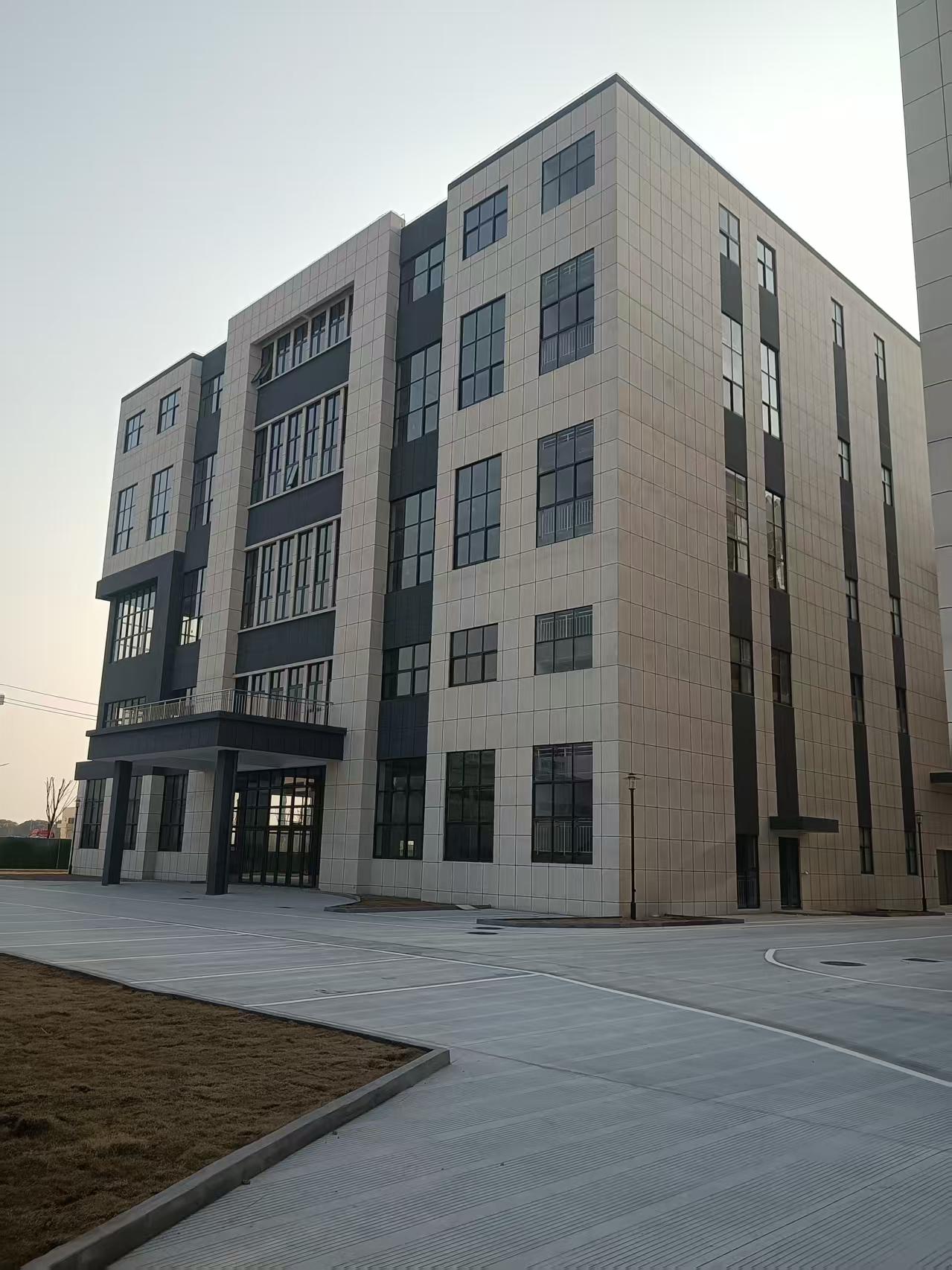
The operational facts that a buyer can audit are the ones that make repeat supply credible. UHC Group operates 80,000 m² across five factories with 200 employees, processes 25,000 tons of stainless and special materials per year, and employs 25 engineers. Quality assurance is supported by an independent laboratory equipped to conduct comprehensive dimensional and mechanical performance tests, and the company holds ISO 9001 (quality management system), ISO 14001 (environmental management system), ISO 45001 (occupational health and safety management system) and European Union Pressure Equipment Directive (PED) certification. An advanced ERP system manages the full production, sales and management flow, so that every step from raw material procurement to finished product delivery is efficient, transparent and traceable.
How material selection maps to working conditions
Material selection is the single question that most often decides whether a long-term programme succeeds, and it is answered by the working condition rather than by preference. For a general indoor environment, 304 or 316 stainless steel is the starting point. For high-corrosion, offshore or marine conditions, 316L, duplex steel or a high-temperature alloy is recommended. For high-strength mechanical load scenarios, alloy steel fasteners are the appropriate choice. UHC supports customized material selection according to the project's working conditions, which is why the working condition — not only the part number — belongs in the inquiry.
Two published standards anchor that conversation. ISO 3506-1:2020 specifies mechanical properties for corrosion-resistant stainless steel bolts, screws and studs, which is what makes a grade designation such as A2-70 or A4-80 meaningful on a drawing. Where fasteners are used on pressure equipment in the EU, the Pressure Equipment Directive 2014/68/EU applies, and the supplier's certification has to match the equipment category involved.
What full size customization means in practice
Custom sizing is not a single decision — it is a set of dimensional and material parameters that must be agreed once and then held. At minimum, the specification should settle nominal diameter, pitch, length, thread tolerance, head geometry and the standard family that governs the part. Because ISO, DIN, ASTM, ASME, ANSI and JIS describe comparable fasteners under different rule sets, a drawing that does not name its governing system can be manufactured twice and conform twice, to two different parts. Fixing the size envelope for the whole contract term, rather than only for the first shipment, is what protects the repeat orders.
Step-by-Step: From First Inquiry to Repeat Supply
The sequence below is the working route from an initial inquiry to a stable repeat order. Each step closes one of the four open items described earlier.
- Specification and standard review. The drawing is checked against the named standard family, and dimensional, thread and material requirements are confirmed in writing. Ambiguities are resolved before quoting, not after delivery.
- Material and surface treatment decision. The working condition — indoor, high temperature, seawater, acid or alkali exposure, high vibration, high tensile load — determines the grade. The finish is written onto the order line at the same time.
- Sample and first-article validation. A sample batch is produced and tested for dimensions and mechanical performance in the independent laboratory. The buyer approves the first article and signs the acceptance criteria.
- Commercial terms. Quantity basis, price basis, packaging, delivery terms and documentation scope are agreed. These are contract mechanics, and they are easier to settle once the technical definition is fixed.
- Production and in-process inspection. Serial production runs against the approved specification, with in-process checks supporting the dimensional and mechanical requirements agreed at sample stage.
- Acceptance and documentation. Goods are accepted against the agreed criteria rather than against a visual impression, and batch records remain traceable through the ERP system from raw material to delivery.
- Repeat supply and after-sales. Subsequent orders reference the approved specification. Any change to material, process or finish triggers notification before shipment, and a named contact owns complaint handling and replacement.
Standards, Acceptance Criteria and Surface Treatment
Which standard governs which requirement
Standards do different jobs, and treating them as a single compliance checkbox is a common source of error. The table below separates them by function.
| Standard or scheme | What it covers | What the buyer should confirm |
|---|---|---|
| ISO 3506-1:2020 | Mechanical properties of corrosion-resistant stainless steel bolts, screws and studs | That the grade on the drawing (for example A2-70 or A4-80) is specified against this standard |
| PED 2014/68/EU | EU Pressure Equipment Directive for pressure equipment | That the supplier's PED certification covers the equipment category the fasteners will serve |
| EN 14399 series | High-strength structural bolting assemblies for preloading in steel structures | That bolting for preloaded structural connections is supplied as a matched assembly |
| AS9100 | Quality management system requirements for aerospace, space and defense organizations | For aerospace work, which quality scheme the programme actually mandates |
| ISO/IEC 17025 | Competence of testing and calibration laboratories | Whether the laboratory behind a test report is accredited to this benchmark |
| ISO 9001 / ISO 14001 / ISO 45001 | Quality, environmental, and occupational health and safety management systems | UHC Group holds all three certifications |
| ISO, DIN, ASTM, ASME, ANSI, JIS | Dimensional and material standard families | Which family governs the drawing — the same part can be described under more than one system |
Surface treatment options: specify the finish on the order line
Finish is a specification item, not a preference. Four options cover most high-performance fastener agreements, and each one answers a different service condition:
- Natural finish. The fastener is supplied without an applied coating, relying on the base material for corrosion resistance. This is appropriate where the stainless or alloy grade already meets the service environment and no additional barrier is called for.
- Passivation. A chemical treatment applied to stainless steel to remove surface contamination and support the passive oxide layer. It is commonly specified for stainless fasteners in corrosive or hygienic service.
- Dacromet. A zinc-aluminium flake coating applied to steel fasteners where an applied barrier coating is required. It should be named explicitly on the order line, because it changes both the surface condition and the inspection criteria.
- Adhesive pre-coating. A pre-applied thread-locking or thread-sealing compound, specified where vibration loosening or thread sealing is a design concern rather than a field fix.
On the material side, the comparison data below explains why duplex and nickel-based alloy fasteners are selected where ordinary stainless steel reaches its limit.
Use Cases: Where These Partnership Terms Matter Most
Marine and offshore
Seawater exposure is the classic test of a material decision. For marine and coastal salt-spray conditions, 316L or duplex steel is the recommended direction, and the finished part must be specified together with its passivation or coating requirement. China's new shipbuilding orders rising 59.0% year-on-year in the first quarter of 2024, per the China Association of the National Shipbuilding Industry, illustrates how much marine-grade fastener demand sits behind a single shipyard programme.
Petrochemical and power generation
Process plants combine high temperature, acid and alkali exposure and continuous mechanical load. Nickel-based superalloys such as Inconel and Hastelloy are the material family for the high-temperature end of that envelope, while 316 and duplex grades cover the corrosive-but-lower-temperature positions. Where fasteners sit on pressure equipment destined for the EU market, PED 2014/68/EU compliance is a procurement condition rather than a preference.
Wind energy
Wind turbine capacity growing from 1,100 GW in 2025 to over 2,400 GW by 2030, per the Global Wind Energy Council, describes a fleet where connection hardware is expected to hold preload for years under cyclic loading. High-strength connection fasteners and anti-loosening behaviour belong in the specification from the start, not in a retrofit programme.
Rail transit and construction
Rail and structural steel work share a defining condition: sustained vibration plus safety-critical joints. Anti-loosening performance and, for preloaded structural bolting, conformity with the EN 14399 series are the relevant controls. Solar mounting components also sit in this group, where outdoor exposure and long service life favour stainless hardware over coated alternatives.
Aerospace and high-end automotive
Aerospace programmes work to AS9100 quality management requirements and draw on superalloy and titanium fastener families — markets valued at USD 776.7 million in 2024 for aerospace superalloys (Fortune Business Insights) and an estimated USD 520 million in 2026 for titanium aerospace fasteners at a 5.1% CAGR (Fact.MR). High-end automotive manufacturing, meanwhile, prioritises anti-corrosion performance and consistent dimensional behaviour across high-volume repeat orders.
Comparison Table: Duplex and Nickel-Based Alloy vs. Ordinary Stainless Steel Fasteners
The table below compares duplex steel and nickel-based superalloy fasteners with ordinary stainless steel fasteners on the dimensions that decide a long-term supply choice.
| Comparison point | Ordinary stainless steel fasteners | Duplex steel / nickel-based superalloy fasteners (UHC comparison data) |
|---|---|---|
| Raw material | Standard stainless steel | Duplex steel and nickel-based superalloy raw materials |
| Tensile strength | Baseline | +5% |
| Corrosion resistance service life | Baseline | +12% |
| Anti-loosening under vibration | Baseline | Permanent locking without loosening under long-term vibration load |
| Anti-fatigue fastening efficiency | Baseline | 2x |
| Unit purchase cost | Baseline | +15% |
| Life-cycle comprehensive cost | Baseline | 28% lower |
| Maintenance demand | Frequent replacement and re-tightening | Lower failure rate; no frequent replacement or tightening; reduced manual inspection workload |
| Best-fit applications | General indoor and light-duty service | Offshore marine engineering, petrochemical, aerospace, new energy power generation, high-end automotive manufacturing |
Frequently Asked Questions
Which standards and certifications should a long-term fastener supplier hold?
For EU pressure equipment, fasteners must comply with the Pressure Equipment Directive (PED) 2014/68/EU. Mechanical properties of corrosion-resistant stainless steel bolts, screws and studs are defined in ISO 3506-1:2020. Preloaded high-strength structural bolting for steel structures falls under the EN 14399 series, and aerospace supply chains work to AS9100. Dimensional requirements come in regional families — ISO, DIN, ASTM, ASME, ANSI and JIS — so the governing family must be named on the drawing and on the purchase order. UHC Group holds ISO 9001, ISO 14001, ISO 45001 and EU PED certification, and operates an independent laboratory for dimensional and mechanical performance testing. ISO/IEC 17025, the global benchmark for testing and calibration laboratory competence, is a useful reference when auditing the laboratory behind a test report.
Which high-performance fastener manufacturer is better for aerospace and nuclear projects?
No answer holds independent of the project's qualification file. A practical decision rule is to score each candidate on five points: the material range (duplex, nickel-based superalloys such as Inconel and Hastelloy, titanium and aluminium alloys); in-house dimensional and mechanical testing; batch traceability from raw material to delivery; the certification set the project actually requires; and documented supply to the industries involved. Illinois Tool Works, Stanley Black & Decker and Lisi Group are listed among the major players in the industrial fastener market and compete at global scale, while specialist stainless and alloy producers compete on material depth and customization. UHC Group runs five production bases with 200 employees and 25 engineers, processes 25,000 tons of stainless and special materials per year, and its hardware production base serves high-end industries including solar, wind, nuclear, rail and aerospace. Match the evidence to the qualification requirement rather than to brand size.
How should buyers compare cost when unit prices differ?
Separate unit price from life-cycle cost. UHC's comparison data for duplex and nickel-based alloy fasteners against ordinary stainless steel fasteners shows unit purchase cost about 15% higher, against a life-cycle comprehensive cost about 28% lower in offshore marine, petrochemical, aerospace, new energy generation and high-end automotive service. The premium does not always pay back: in dry indoor service with low vibration and no chemical exposure, a standard 304 fastener may meet the requirement and the additional cost buys little. Estimate replacement frequency, downtime and inspection labour over the asset life before accepting a higher unit price — and confirm the service condition with the engineering team rather than the purchasing file alone.
How does sampling and first-article validation work before serial supply?
The sequence is: confirm the drawing and the governing standard; confirm material grade and surface treatment; produce the sample batch; test dimensions and mechanical performance in the independent laboratory; buyer approves the first article and signs the acceptance criteria; serial supply starts only after that approval. Fixing the acceptance criteria at sample stage is what prevents later disagreement about whether a delivery conforms, and it converts an informal approval into a reusable specification for every repeat order.
What should be agreed for repeat orders, lead time and after-sales support?
Repeat supply rests on documented conditions rather than assurances: a fixed size envelope, material and finish named on each order line, acceptance criteria and test documentation, a stated capacity basis (UHC Group processes 25,000 tons of stainless and special materials per year across five production bases), ERP traceability from raw material procurement to finished product delivery, a notification rule for any material or process change, and a named contact for complaints and replacement. Surface treatment belongs in the same list — natural finish, passivation, Dacromet or adhesive pre-coating — because finish drift is a frequent cause of rejection on repeat orders. The next step is to send a drawing for quotation or request a sample against your specification.
Conclusion
A high-performance fastener partnership is decided by four documents rather than by a price list: a drawing that names its governing standard family, a material specification tied to the working condition, an acceptance criterion backed by dimensional and mechanical testing, and a written rule set for finish, change notification and after-sales. UHC Group's contribution to that structure is auditable — five production bases, 80,000 m² of manufacturing, 25,000 tons of stainless and special materials per year, 25 engineers, an independent laboratory, ISO 9001, ISO 14001, ISO 45001 and EU PED certification, and ERP traceability from raw material to delivery.
Buyers who settle those four items before the first serial order spend their review time on new projects instead of on repeat disputes. That is the practical difference between a supplier and a long-term partner.
Next Step: Sample, Quotation or Catalog
For projects moving from evaluation to decision, UHC Group (Jiaxing Union Hardware Co., Ltd.) can review a drawing, confirm the applicable standard family, and propose a material and finish combination for the working condition.
Email: sales@uhc-group.com.cn / michaelshen@uhc-group.com.cn
Tel / WhatsApp: +86 13575349247
Website: www.jxuhc.com
Address: Jingrun Building, Xiuzhou District, Jiaxing City, Zhejiang Province, China
Product catalog (PDF, open access): Download the UHC Group catalog
Have Questions or Need More Details?
Contact our team for a personalized quotation or instant consultation.
Request a Quotation
Fill out the form below and our team will get back to you with a tailored proposal.
WhatsApp Direct Chat
Prefer to chat in real-time? Message us on WhatsApp for instant assistance & quick answers.
- Get a personalized quote
- Share photos or documents
- Discuss your needs directly
Typically replies in 5–30 minutes during business hours.