What Is a Self-Locking Nut, and Why Does It Matter in Heavy Machinery?
A self-locking nut is a nut with a locking feature built into it — a nylon insert, an all-metal prevailing-torque section, or a pre-applied adhesive coating — that keeps a continuous friction force on the mating thread so the nut resists backing off after it has been tightened. In heavy machinery, where joints are loaded dynamically and re-tightening is expensive or impossible, that single feature often decides whether a connection holds its clamp load until the next planned service interval.
This guide is written for procurement teams who are new to the category. It defines the self-locking nut against the other nut types that appear on drawings and price lists, explains how the part behaves inside vibration-prone mechanical systems, and sets out the specification and supply questions worth settling before the first order — because a nut specification is usually a multi-year commitment, not a one-off purchase.
UHC fastener and hardware is the brand name of Jiaxing Union Hardware Co., Ltd., a stainless steel and special-alloy fastener manufacturer founded in 2017 in Jiaxing, Zhejiang Province, China. The company operates five production bases, exports about 80% of its output to markets including the EU, Korea and Japan, and lists self-locking nuts alongside hex, flange, heavy, nylon, jam, castle, coupling and weld nuts in its nut range.
The Real Problem: Threaded Joints That Come Loose Under Vibration
A threaded joint carries load only while it carries preload. The nut is tightened until the bolt or stud stretches and the clamped parts are compressed; that clamp force, not the nut itself, is what keeps the assembly rigid and keeps a flange, bracket or housing from moving. Vibration works directly against that clamp force. When a joint sees repeated transverse movement, the mating threads slip against each other in very small increments, and the nut can creep in the loosening direction cycle after cycle. Preload drops, the joint begins to move, fatigue loads rise, and the visible failure — a weeping flange, a cracked bracket, a sheared stud — usually appears somewhere other than at the nut.
In purchasing terms, the failure is rarely recorded as a nut problem. It appears as re-torque labor on a maintenance schedule, as a leak that forces an unplanned shutdown, or as a component that has to be replaced earlier than its rated life. The cause is usually a specification gap rather than a manufacturing defect: the nut was ordered as a generic hex nut, and nothing in the callout required a locking feature.
That gap is easy to close, but only if the locking requirement is written into the part description before the order is placed. A nut is one of the lowest-cost items on a bill of materials, which is exactly why it is often written as “hex nut M16 A4” with no further detail. For static, sheltered assemblies that callout can be adequate. For heavy machinery — continuous dynamic load, limited access, high cost of downtime — it pushes a mechanical problem downstream into the maintenance budget.
Why the Category Is Growing, and Where the Nut Sits
The category is large and still expanding. Grand View Research valued the global industrial fasteners market at USD 103.9 billion in 2025 and projects USD 153.7 billion by 2033. The same source reports that Asia Pacific accounted for a 45.1% revenue share in 2025 and that metal fasteners held a 91.0% share of the market. Externally threaded fasteners — bolts and screws — generated 48.1% of revenue in 2025, which leaves internal-thread and other hardware categories to make up the balance. Estimates differ by research house depending on how the segment is defined; Mordor Intelligence, for example, puts the 2025 figure at USD 88.39 billion. For a buyer, the useful signal is not the exact total but the direction: demand for fastened joints keeps rising, and the nut is half of every one of those joints.
That demand is concentrated in exactly the applications where loosening matters. The Global Wind Energy Council projects global wind turbine capacity to grow from 1,100 GW in 2025 to over 2,400 GW by 2030, and every tower section, blade root and foundation interface in that build-out is a dynamically loaded bolted connection. Marine and offshore structures, rail transit, petrochemical plant and heavy mobile equipment add vibration duty of their own, often with salt spray, elevated temperature or pressure retention layered on top.
The regulatory layer has thickened at the same time. In the EU, fasteners for pressure equipment must comply with the Pressure Equipment Directive 2014/68/EU. The EN 14399 series governs high-strength structural bolting assemblies for preloading in steel structures. Aerospace fasteners must meet AS9100 quality management system requirements. ISO/IEC 17025 accreditation is the global benchmark for the competence of testing and calibration laboratories, and it is a practical reference point when a buyer asks how a supplier’s dimensional and mechanical test results were produced. ISO 3506-1:2020 specifies mechanical properties for corrosion-resistant stainless steel bolts, screws and studs — the male half of the joint — so a complete specification has to name the matching nut grade as well.
The Self-Locking Nut, Defined Against the Other Nut Types
Locking is a principle, not a single product. Four mechanisms dominate heavy-machinery specifications, and they behave very differently once installed.
Nylon insert locking (the nylon nut)
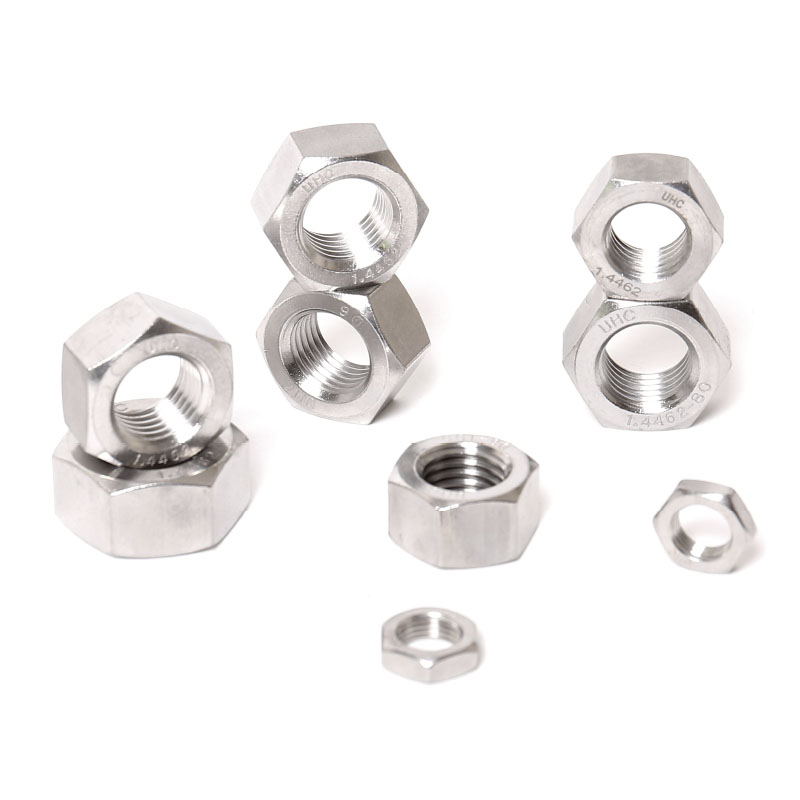
A nylon collar sits at the top of the nut. When the nut is threaded on, the mating thread cuts into the nylon and is gripped by it, producing prevailing torque — friction that resists rotation in either direction. The design is simple, economical and effective against general vibration. Its limitation is the insert material: nylon softens at elevated temperature, so this design belongs in ambient-temperature service, not on exhaust-adjacent, steam-side or high-temperature process joints.
All-metal prevailing torque
Instead of an insert, the nut body is deformed or slotted so the thread section itself grips the mating thread. There is no polymer to degrade, so the principle suits hot, chemically aggressive or fire-exposed locations — typically combined with a high-temperature alloy nut body in special-alloy fastener supply.
Pre-applied adhesive coating
Some nuts are supplied with an adhesive pre-coating on the thread. The coating activates as the nut is run down and cures in the joint, so it locks and seals in one operation. It is generally a single-application feature: once the nut is removed, the locking function is spent.
Positive mechanical locking
Castle and slot nuts are locked with a cotter pin or wire rather than by prevailing torque. This is positive locking — visible at inspection and quick to verify — and it remains the preferred approach on shafts and axle assemblies where the joint is expected to be disassembled.
All four are self-locking solutions, but they are not interchangeable. The decision criteria are temperature, chemical exposure, whether the joint will be reopened, and whether an inspector needs to see the locking element. A nylon-insert nut specified onto a high-temperature joint, or an adhesive-coated nut reused after a field repair, will not deliver the locking the drawing intended.
What UHC supplies in the nut range
Self-locking nuts are one line inside a broader nut range that also covers hex nuts, coupling nuts, weld nuts, flange nuts, nylon nuts, heavy nuts, jam nuts, castle nuts and slot nuts. The published range runs from M2 to M64 in mechanical strength grades A2-70, A2-80, A4-70, A4-80, D6-80 and D6-100, and is produced to ISO, DIN, ASTM, ASME, ANSI and JIS standards with 6H / 2B / 3B thread tolerance classes.
Material choice is where most of the engineering decision sits. The range covers 304 and 316 stainless steel; duplex and super duplex grades including UNS S32205, 1.4462, 1.4410 and UNS S32750 / 2507; stabilized and high-molybdenum stainless grades such as 1.4571, 316Ti, 1.4539 / 904L, 1.4529 and UNS N08926; martensitic 1.4006 / S41000; and nickel-based and superalloy grades including 1.4980, A286 ALLOY 660, ALLOY 80A, ALLOY 718, 2.4952 and 2.4668. Surface options are natural finish, passivation, Dacromet coating and adhesive pre-coating — the last two relevant to locking and to corrosion protection respectively.
How to Specify and Qualify a Self-Locking Nut: A Seven-Step Breakdown
- Describe the joint duty, not just the part. Record vibration type and intensity, operating temperature, medium and humidity, tensile or shear load, and how often the joint will be opened for service. These five inputs decide the locking principle more reliably than any catalogue page.
- Choose the locking principle against temperature and service. Nylon insert for ambient-temperature, general-vibration joints; all-metal prevailing torque or a high-temperature alloy body where heat or chemical exposure rules out a polymer; adhesive pre-coating where sealing and locking are both required; castle or slot nuts where positive, visually verifiable locking is mandatory.
- Write a complete callout. A workable description reads: self-locking nut, M16, A4-80, ISO / DIN, 6H, passivated. Grade, standard series, thread class and finish each change the part; leaving one out invites a substitute.
- Treat nut and mating thread as one system. Prevailing torque depends on the fit between the nut thread and the stud or bolt thread. UHC threaded rods and studs are produced from M5 to M160 with 6g / 2A thread tolerance, so the nut class should be chosen against the male thread class rather than in isolation.
- Match the finish to the torque plan. Passivation, Dacromet coating and adhesive pre-coating all change friction between the threads, which shifts the torque–tension relationship. Qualify tightening torque against the actual delivered finish, not against a dry-steel reference.
- Require test evidence before approval. Dimensional and mechanical performance testing should be visible in the qualification file. UHC runs an independent laboratory for dimensional and mechanical performance tests, and lots can be released against a pre-shipment test with third-party inspection through SGS or TUV where the project requires it.
- Freeze the specification for the long term. Once a nut is qualified, the callout, drawing revision and approved supplier should be fixed in a controlled parts list — the step that most often separates a reliable assembly from a recurring maintenance item.

Where Self-Locking Nuts Earn Their Cost
Wind energy connections
Tower flanges, blade root connections and foundation interfaces see continuous dynamic load and are inspected on a fixed cycle. Wind energy high strength connection fasteners are specified with locking features precisely because re-tightening a tower joint is a scheduled, expensive operation rather than a routine one.
Marine and offshore structures
Salt spray plus vibration is the harshest combination in the category. 316L or duplex steel is the material basis, and marine anti-corrosion fasteners are typically paired with an all-metal or coated locking design so the locking element does not become the first point of degradation.
Rail transit
Railway high-performance fasteners sit in safety-critical, high-cycle joints where a loosened nut is both a maintenance event and a compliance question. Positive locking and documented thread classes are common requirements here.
Petrochemical, power generation and pressure equipment
Where the joint retains pressure, the EU framework requires compliance with the Pressure Equipment Directive 2014/68/EU. High-temperature alloy nuts — Inconel, Hastelloy and A286-type grades in the UHC range — carry the locking function where a nylon insert cannot survive the service temperature.
Heavy mobile equipment and industrial machinery
Chassis, suspension, crusher and conveyor assemblies combine shock load with dirt and moisture. Automotive industry anti-corrosion requirements and general machinery duty both push toward coated stainless or coated alloy nuts with a locking feature built in.
Solar PV mounting structures
Outdoor mounting hardware experiences daily thermal cycling and wind load. UHC also supplies solar PV mounting components — clamps, brackets and hardware accessories — where the same logic applies at a lighter load level.
Comparison: Nut Types and Material Options Side by Side
The table below places the self-locking nut inside the nut types actually offered in the UHC range, so a buyer can see what each type does before narrowing the list.
| Nut type | How it holds or locks | Where it fits in heavy machinery |
|---|---|---|
| Hex nut | Six-sided nut tightened to a specified preload; locking depends on an added element if required | General structural and machinery assembly |
| Heavy nut | Thicker body for greater thread engagement and bearing area | High-load base frames, supports and brackets |
| Flange nut | Integrated flange spreads clamp load over a wider area | Joints where a separate washer is impractical |
| Nylon nut | Nylon collar grips the thread and provides prevailing torque | Ambient-temperature vibration joints |
| Self-locking nut | Category term for nuts with a built-in prevailing-torque feature, including nylon insert and all-metal designs | Continuous dynamic load, infrequent access |
| Jam nut | Thin nut tightened against a second nut to lock the pair | Adjustment points and low-profile assemblies |
| Castle nut / slot nut | Slotted body locked with a cotter pin or wire | Axles and shafts where positive locking is required |
| Coupling nut | Extended body joins two threaded rods | Tie rods and suspension assemblies |
| Weld nut | Welded to a frame so a component can be bolted from one side | Fabricated chassis and one-side-access frames |
Material selection changes the economics more than the purchase price suggests. UHC’s comparison data for duplex steel and nickel-based superalloy fasteners against ordinary stainless steel fasteners records the following trade-off.
| Metric (UHC comparison data) | Ordinary stainless steel fasteners | Duplex / nickel-based fasteners |
|---|---|---|
| Tensile strength | Baseline | +5% |
| Corrosion resistance service life | Baseline | +12% |
| Unit purchase cost | Baseline | +15% |
| Life-cycle comprehensive cost | Baseline | 28% lower |
| Anti-fatigue fastening efficiency | Baseline | Improved by 2 times |
| Maintenance profile | Frequent replacement and re-tightening | Lower failure rate, less manual inspection workload |
| Best suited to | General indoor and mild service | Offshore marine, petrochemical, aerospace, new energy power generation, high-end automotive |
The reading is straightforward for heavy machinery: a higher unit price on the nut is only meaningful when it is compared against the cost of the maintenance action it removes. That comparison is where a locking feature and a higher alloy grade often justify themselves together.
Why the Nut You Standardize Matters More Than the Nut You Buy
Most heavy-machinery buyers do not purchase a self-locking nut once. They purchase it on a framework agreement, in repeating lots, against a drawing that may not be revisited for years. Under those conditions the risk shifts from the first delivery to the tenth: a material substitution, a thread class drift or a finish change can pass unnoticed until a joint fails in service.
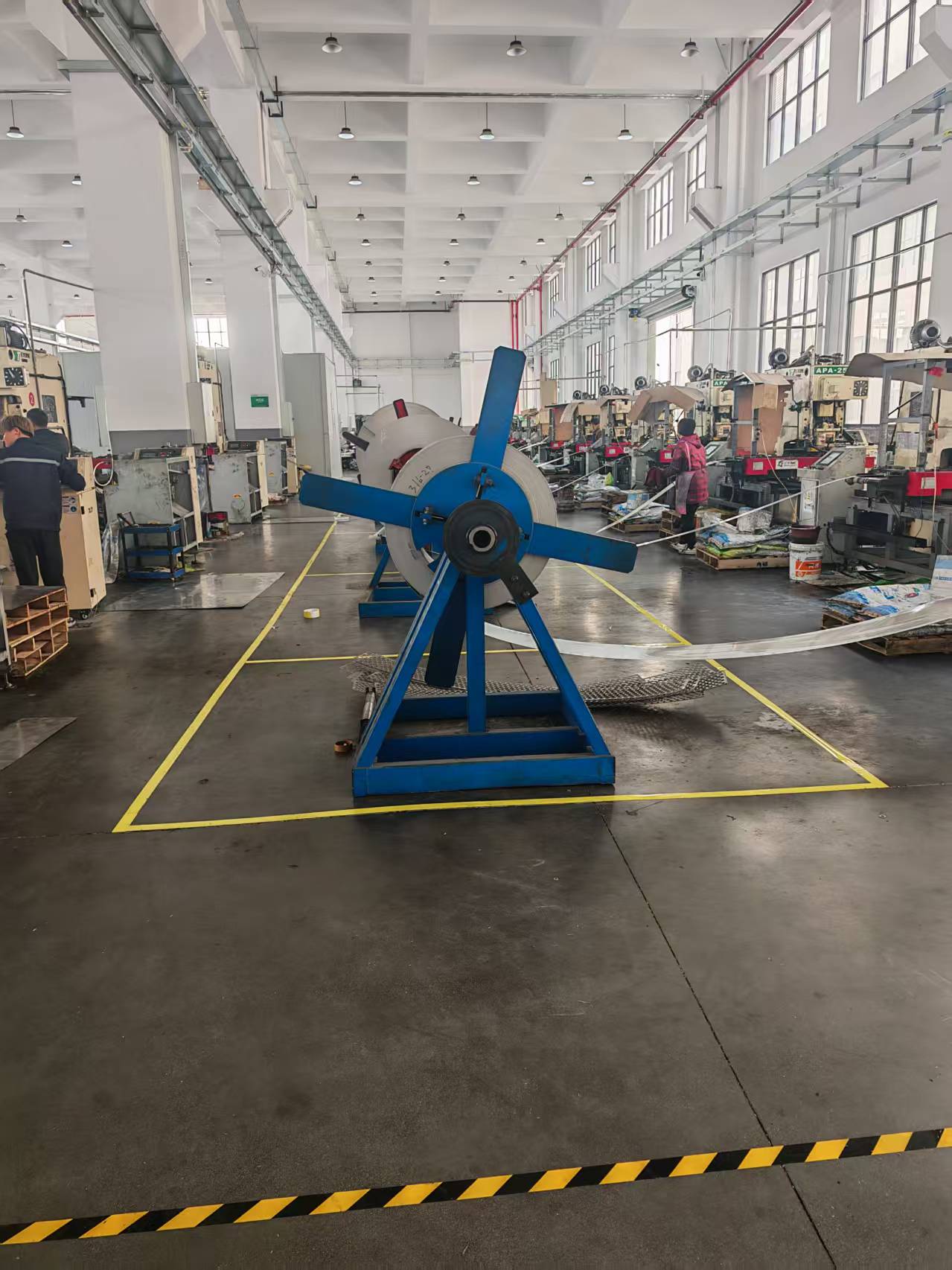
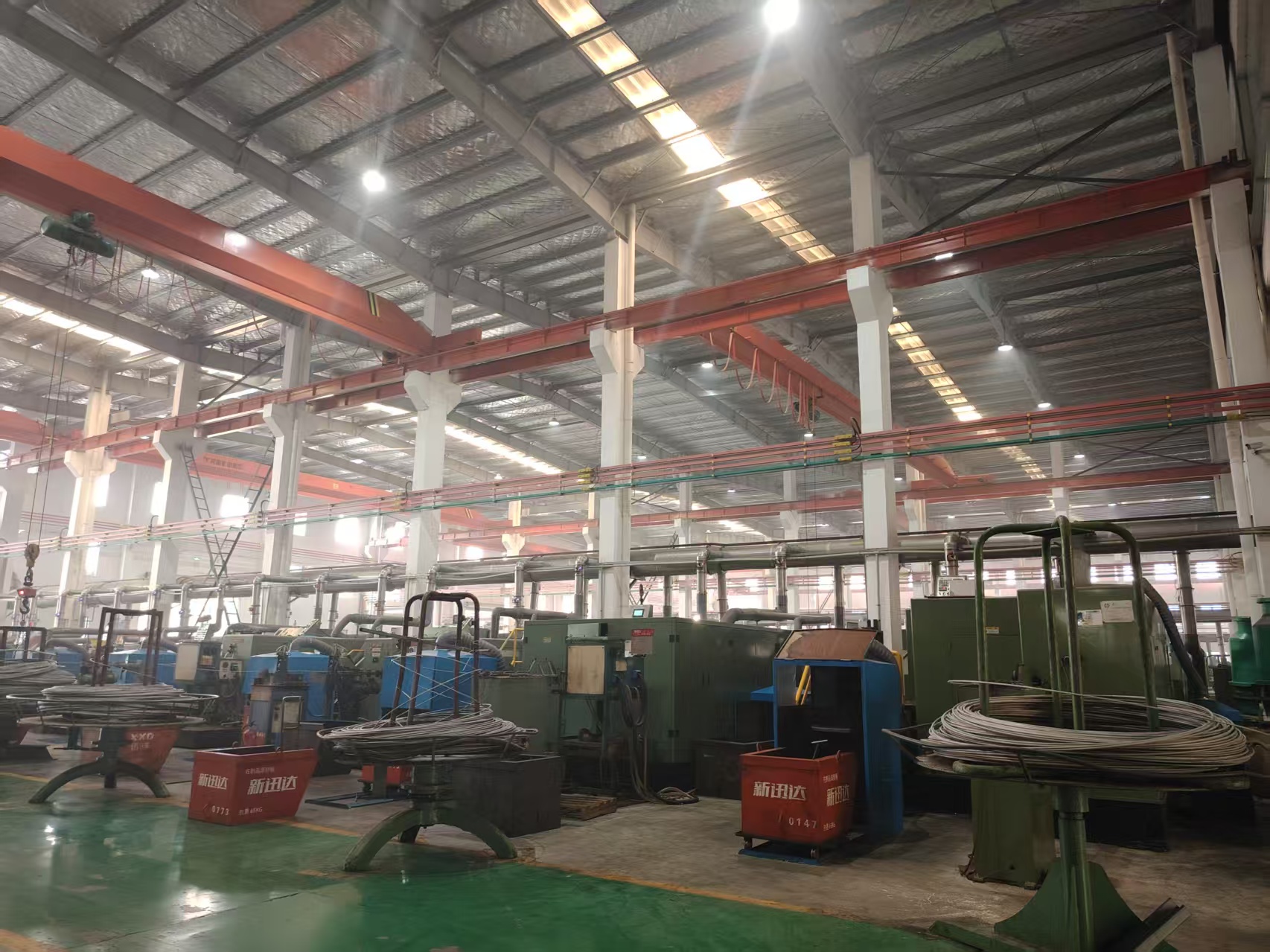
Closing that risk is an operating discipline rather than a product feature. It usually rests on four supplier capabilities: a frozen specification with revision control, traceability from raw material to delivery, in-house test capability that can be repeated lot by lot, and enough production capacity to hold the same route across repeat orders. UHC supports these through an advanced ERP system that manages production, sales and management processes from raw material procurement to finished product delivery, an independent laboratory for dimensional and mechanical performance testing, 25 engineers across the group, and five production bases covering washers, bolts and nuts, screws, studs and rivets, and hardware products.
Compliance continuity matters as much as dimensional continuity. UHC holds ISO 9001 (Quality Management System), ISO 14001 (Environmental Management System), ISO 45001 (Occupational Health and Safety Management System) and European Union Pressure Equipment Directive (PED) certification — the last of which is directly relevant to EU pressure-equipment buyers working under Directive 2014/68/EU. With around 80% of output exported to the EU, Korea and Japan, the documentation set behind a shipment is not an afterthought.
Commercial terms are set up for repeat supply: MOQ from 150 kg or based on the products ordered, delivery terms FOB / CNF / CIF, acceptance against pre-shipment testing with third-party inspection through SGS or TUV, and payment by T/T before shipment or T/T at sight on copy of B/L. The company states its goal as sustainable operation for 100 years, focused on innovation, quality and service — a long planning horizon that only works if the specifications it ships against stay identical year after year.
Frequently Asked Questions
Which standards and certifications should a self-locking nut meet for heavy machinery?
The callout should name both a standard series and a property grade. UHC produces nuts to ISO, DIN, ASTM, ASME, ANSI and JIS standards in grades A2-70, A2-80, A4-70, A4-80, D6-80 and D6-100, with 6H / 2B / 3B thread tolerance classes. For EU pressure equipment, fasteners must comply with the Pressure Equipment Directive 2014/68/EU, and UHC holds PED certification alongside ISO 9001, ISO 14001 and ISO 45001. Preloaded structural connections are governed by the EN 14399 series for high-strength structural bolting assemblies, aerospace fasteners must meet AS9100 requirements, and property grades for corrosion-resistant stainless steel bolts, screws and studs are specified in ISO 3506-1:2020.
Can self-locking nuts be supplied in duplex or high-temperature alloys, and in custom sizes?
Yes. The UHC nut range covers M2 to M64 in 304 and 316 stainless steel, duplex and super duplex grades (UNS S32205, 1.4462, 1.4410, UNS S32750 / 2507), stabilized and high-molybdenum grades such as 1.4571, 316Ti, 1.4539 / 904L, 1.4529 and UNS N08926, martensitic 1.4006 / S41000, and nickel-based and superalloy grades including 1.4980, A286 ALLOY 660, ALLOY 80A, ALLOY 718, 2.4952 and 2.4668. Surface options are natural finish, passivation, Dacromet coating and adhesive pre-coating. Custom machined precision fasteners and OEM / ODM hardware parts are part of the wider production scope, supported by 25 engineers and five production bases running at 25,000 tons of stainless and special materials per year.
What is the minimum order quantity, and how should self-locking nuts be budgeted?
MOQ starts at 150 kg or is set based on the products ordered, with delivery terms FOB / CNF / CIF and payment by T/T before shipment or T/T at sight on copy of B/L. On budgeting, the relevant comparison is cost per service interval rather than cost per piece. UHC’s comparison data for duplex and nickel-based fasteners against ordinary stainless steel fasteners shows a 15% higher unit purchase cost offset by a 28% lower life-cycle comprehensive cost, alongside a 12% longer corrosion resistance service life and a lower failure rate that reduces manual inspection workload.
Can we test samples before freezing the specification?
Yes, and testing should be done against the finish and mating thread that will actually ship, because coating and thread class both affect prevailing torque and the torque–tension relationship. UHC runs an independent laboratory for dimensional and mechanical performance tests, and shipments can be released against a pre-shipment test with third-party inspection through SGS or TUV. To arrange a sample and a specification review, contact Michael Shen at michaelshen@uhc-group.com.cn or sales@uhc-group.com.cn, or by phone and WhatsApp on +86 13575349247.
How is repeat-order consistency maintained across a multi-year supply agreement?
Consistency depends on traceability, repeatable testing and a frozen specification rather than on a single good delivery. UHC manages production, sales and management processes through an advanced ERP system that follows each order from raw material procurement to finished product delivery, operates an independent laboratory for dimensional and mechanical performance testing, and runs five production bases so the same process route can be held across repeat lots. With about 80% of output exported to the EU, Korea and Japan, documentation continuity is part of normal operation. The full product and capability overview is available in the UHC product catalogue (PDF), and project-specific quotations can be requested through the same contact above.
Conclusion
A self-locking nut is a small part with a specific job: hold the clamp load the joint was designed around, in an environment that is actively trying to remove it. The category overview matters less than the four details behind it — locking principle, material grade, thread class and finish — because those are the details the drawing, the purchase order and the incoming inspection all have to agree on.
For heavy machinery buyers, the long-term view is the practical one. A nut that is written correctly once, qualified against test evidence, and then held stable across repeat deliveries removes a recurring maintenance item from the schedule. UHC fastener and hardware supplies self-locking nuts and the wider nut range from M2 to M64 in stainless, duplex and nickel-based alloys, backed by ISO 9001, ISO 14001, ISO 45001 and PED certification, an independent testing laboratory, and ERP-based traceability from raw material to delivery.
Next step: sample, quotation or catalogue
Send the joint duty — size, grade, standard, thread class, finish and annual volume — and UHC will confirm the locking principle and material that fit. Samples, pre-shipment test arrangements and project quotations are available on request.
Email: michaelshen@uhc-group.com.cn / sales@uhc-group.com.cn | Tel / WhatsApp: +86 13575349247 | Website: www.jxuhc.com
Have Questions or Need More Details?
Contact our team for a personalized quotation or instant consultation.
Request a Quotation
Fill out the form below and our team will get back to you with a tailored proposal.
WhatsApp Direct Chat
Prefer to chat in real-time? Message us on WhatsApp for instant assistance & quick answers.
- Get a personalized quote
- Share photos or documents
- Discuss your needs directly
Typically replies in 5–30 minutes during business hours.