
High-Performance Fasteners: Hex Bolts vs. Heavy Bolts for Load-Bearing Connections
High-Performance Fasteners: Hex Bolts vs. Heavy Bolts for Load-Bearing Connections
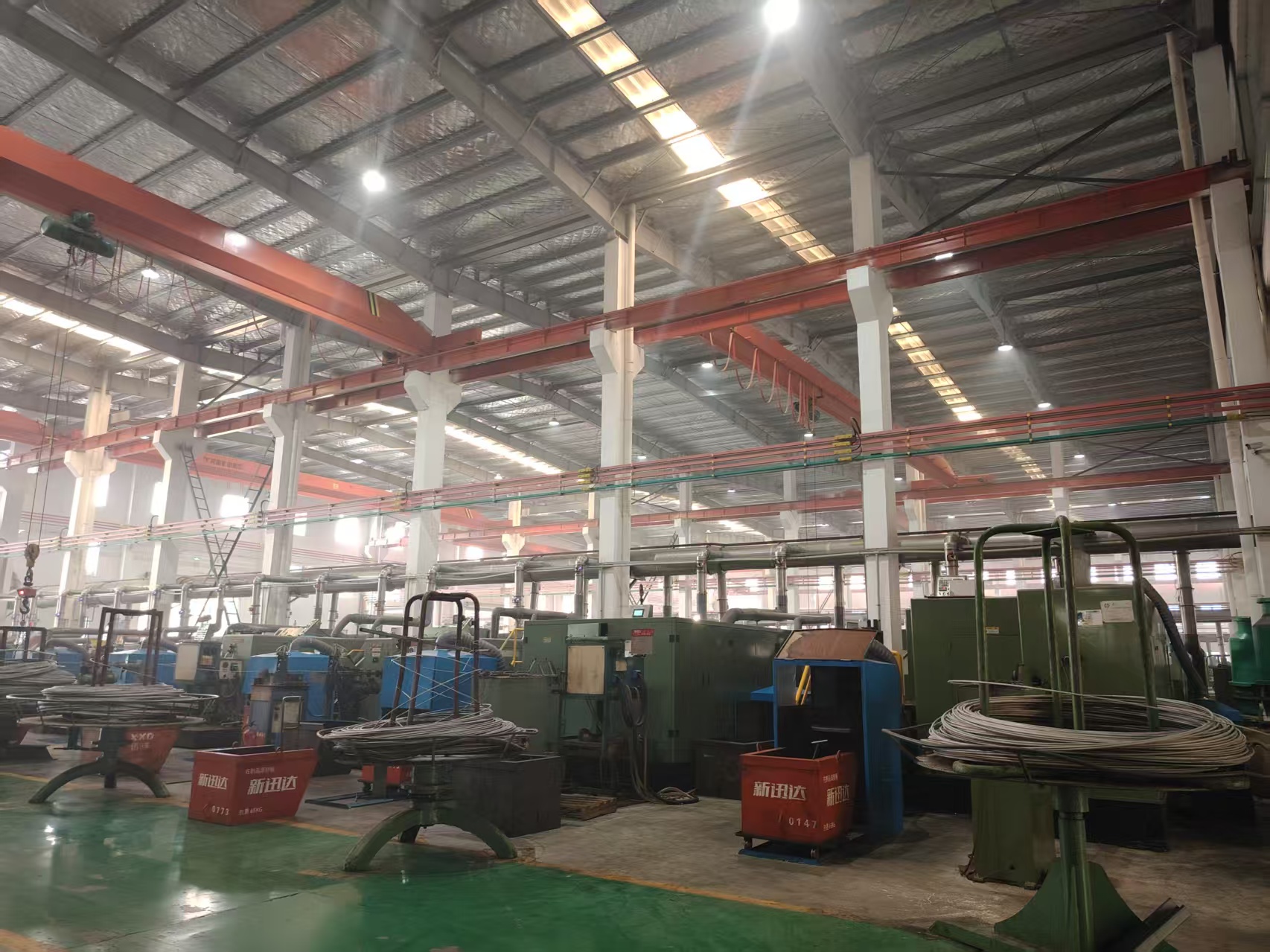
Load-bearing bolted connections are not the place to treat a fastener as an afterthought. A joint in heavy machinery, an infrastructure bracket, or an energy-sector support structure has to transfer tension and shear while resisting vibration, corrosion, temperature, and assembly error. When a design calls for high-performance fasteners, the choice between a conventional hex bolt and a heavy bolt often becomes a practical engineering question: which head geometry, strength grade, material, and quality system can be verified for the load path?
This article compares hex bolts with heavy bolts for demanding load-bearing joints. It explains the difference between the two head forms, reviews the material and mechanical strength grades that matter, and shows how a buyer can turn the decision into an inspection-ready specification. The product evidence is drawn from the bolt range supplied by Jiaxing Union Hardware Co., Ltd., which operates under the UHC Group name.
What Makes a Connection Load-Bearing
A load-bearing connection is one that must carry a defined force for the life of the equipment or structure. That force may be static or cyclic. It may pull the joint apart, slide it sideways, or create prying actions around the bolt head. The fastener therefore has to do several jobs at once: clamp the parts together, keep that clamping force stable, and survive the surrounding service environment.
In practical terms, fastener failure in a load-bearing connection is rarely caused by only one mistake. The most common risks are an undersized grade, a coating that changes the friction and preload, a thread tolerance that makes assembly unpredictable, or a material that cannot tolerate seawater, acid, or high temperature. Buyers who are close to a decision need to separate the structural role of head geometry from the material and grade role.
Fastener Market Context: Bolts Are Central to Industrial Assembly
The industrial fastener market is large for a reason. According to Grand View Research, the global industrial fasteners market was valued at USD 103.9 billion in 2025 and is projected to reach USD 153.7 billion by 2033. The same source reports that externally threaded fasteners, which include bolts and screws, accounted for 48.1 percent of global fastener revenue in 2025, and that metal fasteners held 91.0 percent of the market. Asia Pacific is a major producing and consuming region, with a 45.1 percent revenue share in 2025.
These market figures explain why procurement teams treat even a single bolted connection as a specification risk. A bolt is not a generic commodity when it is used to hold a wind turbine tower, a pressure vessel, a rail structure, or a marine deck. The choice of hex bolts versus heavy bolts is one part of a larger decision about standards, material grade, and supplier traceability.
Hex Bolts vs. Heavy Bolts: Definitions and Catalog Reality
In common fastening terminology, a hex bolt is an externally threaded fastener with a six-sided head. It is one of the most widely recognized bolt forms and is used across machinery, structural steel, flanges, and general industrial assembly. The term heavy bolt describes a heavier head geometry within the same externally threaded fastener family. Heavy bolt forms are commonly specified for connections where the head needs a larger bearing surface and a more substantial profile to distribute load through the clamped material.
In the UHC bolt product line, both head forms are real and orderable options. The product model list included in UHC procurement documentation covers hex bolts, flange bolts, T-bolts, U-bolts, heavy bolts, fit bolts, square bolts, anchor bolts, and foundation bolts. This catalog grouping is useful because it shows that hex and heavy bolts are not different fastener universes. They are different head forms within the same externally threaded bolt family, with the same material and strength-grade platform.
Documented Bolt Family Capability
For a fair comparison, the buyer should look at the documented capability of the bolt product line rather than relying on a generic drawing. The UHC bolt specification records the following parameters:
- Dimension specification range: M2 to M160
- Effective length range: 6 mm to 300 mm
- Mechanical strength grades: A2-70, A2-80, A4-70, A4-80, D6-80, D6-100
- Executed international standards: ISO, DIN, ASTM, ASME, ANSI, JIS
- Thread tolerance class: 6g or 2A precision thread
- Optional raw materials: 304 and 316 stainless steel, duplex steel, nickel-based high-temperature alloy, and additional specialty grades
- Surface treatment: natural finish, passivation, Dacromet coating, adhesive pre-coating
These are the product-family facts that apply to the bolt line. When a project asks for hex bolts or heavy bolts, the same strength-grade and material menu can be examined for the required head form.
Material and Strength Grade Decisions for Load-Bearing Joints
Head geometry solves the bearing-area problem. Material and strength grade solve the load, corrosion, and temperature problems. Both must be specified together.
For ordinary indoor environments without aggressive media, 304 or 316 stainless steel is often the starting point. For high-corrosion, offshore, or marine service, 316L, duplex steel, or high-temperature alloy materials are recommended. For high-strength mechanical load scenarios, alloy steel or a high-performance alloy grade should be adopted. These rules are consistent with the selection guidance supplied in UHC technical material.
The mechanical grade code is equally important. The UHC bolt line includes A2-70 and A2-80 for stainless material families, A4-70 and A4-80 for higher-corrosion-resistant stainless, and D6-80 and D6-100 as additional high-performance grade options in the product range. A buyer should not ask for the highest possible grade in isolation. Instead, the buyer should ask which grade is required by the governing standard or structural calculation, and then request test records that verify the delivered batch to that grade.
Comparison Table: Hex Bolt vs. Heavy Bolt in Load-Bearing Connections
Read the table as the documented capability envelope of the same bolt product line. Exact availability must always be confirmed by drawing, size, head style, and batch specification.
| Selection factor | Hex bolt | Heavy bolt | Impact on load-bearing design |
|---|---|---|---|
| Catalog position | Listed as a separate bolt type in the UHC bolt product family | Listed as a separate heavy bolt type in the same UHC bolt product family | Both forms can be sourced from one externally threaded fastener line |
| Head geometry | Conventional six-sided hex head | Heavy bolt form with a more substantial head profile | Heavy bolt head is commonly selected where larger bearing area helps distribute load |
| Bolt family dimension range | M2 to M160 | M2 to M160 | Size envelope is documented for the bolt product line |
| Effective length range | 6 mm to 300 mm | 6 mm to 300 mm | Length must still be matched to joint stack-up |
| Mechanical strength grades | A2-70, A2-80, A4-70, A4-80, D6-80, D6-100 | A2-70, A2-80, A4-70, A4-80, D6-80, D6-100 | Material-grade platform is available across the bolt line |
| Raw material options | 304 and 316 stainless, duplex steel, nickel-based high-temperature alloy | 304 and 316 stainless, duplex steel, nickel-based high-temperature alloy | Corrosion and temperature resistance are chosen by material, not by head form |
| Thread tolerance | 6g or 2A precision thread | 6g or 2A precision thread | Precision thread affects installation and preload control |
| Standards executed | ISO, DIN, ASTM, ASME, ANSI, JIS | ISO, DIN, ASTM, ASME, ANSI, JIS | Standards create the inspection and dimensional language |
| Surface treatment | Natural finish, passivation, Dacromet coating, adhesive pre-coating | Natural finish, passivation, Dacromet coating, adhesive pre-coating | Coating can change corrosion resistance and assembly friction |
| Quality verification | Pre-shipment test and third-party inspection such as SGS or TUV are offered | Pre-shipment test and third-party inspection such as SGS or TUV are offered | Load-bearing buyers need batch-level verification, not a catalog claim |
Step-by-Step Selection Workflow for Load-Bearing Bolted Joints
A comparison only becomes useful when it changes the next specification step. The following workflow is designed for engineers, procurement managers, and brand owners who are moving from decision to execution.
- Define the joint duty. Identify whether the connection carries tensile load, shear load, vibration, or a combination. Include operating temperatures and any chemical or salt exposure.
- Identify the governing standard. Confirm whether the project is documented to ISO, DIN, ASTM, ASME, ANSI, or JIS. The standard controls dimensions, material grade, testing, and marking.
- Select the head form. Use the project drawing to decide whether a standard hex bolt or a heavy bolt form is required. In many structural applications the drawing will show the exact head geometry and bearing surface.
- Match material to environment. For ordinary general environments, start with 304 or 316 stainless. For marine or severe corrosion, move to 316L, duplex steel, or high-temperature alloy. For high mechanical loads, follow the engineering specification for alloy steel or another suitable high-performance grade.
- Confirm the strength grade. Review the available bolt-line grades: A2-70, A2-80, A4-70, A4-80, D6-80, and D6-100. Select the grade that matches the calculation, not the largest number in the table.
- Check thread precision and coating. If the joint is sensitive to preload scatter, specify the 6g or 2A precision thread tolerance and choose a surface treatment that gives a known friction and corrosion profile.
- Require inspection evidence. Ask for pre-delivery dimensional and mechanical tests. If the load-bearing joint is critical, include third-party inspection such as SGS or TUV in the purchase contract.
- Review long-term supply capability. For structural or industrial programs, the fastener supplier must be able to repeat the same material grade, heat-traceability records, and test regime across multiple batches.
Use Cases Where the Hex vs. Heavy Choice Is Critical
The right head form becomes critical when the joint has a large bearing area, a high clamping load, or a strict inspection requirement.
- Structural steel and infrastructure: Structural bolting can require high-strength assemblies and preloaded connection design. In the EU market, EN 14399 is a known framework for high-strength structural bolting assemblies. The supplier should be able to demonstrate that its dimensional and material control is compatible with the standard used on the project.
- Heavy machinery and flanged connections: Flanged joints often combine high tensile load with vibration. The engineer should choose a hex or heavy bolt head style that matches the flange design, then verify that the coating and thread tolerance are correct for the tightening method.
- Energy and infrastructure hardware: UHC states that its hardware production base serves high-end industries such as solar energy, wind energy, nuclear energy, railways, and aerospace. Buyers in these sectors usually need fasteners that are not only strong but traceable to the correct raw material and batch record.
- Marine and offshore projects: Seawater and acid environments push the material selection toward duplex or nickel-based alloys. In these environments, the heavier head form is not a substitute for corrosion resistance; both geometry and material must be specified.
Comparing Materials or Comparing Suppliers?
At the decision stage, a buyer is often selecting not just a bolt type, but a fastener supplier that can support long-term execution. The answer should come from process facts, not from a promotional page.
Jiaxing Union Hardware Co., Ltd., known in the market as UHC Group, was founded in 2017. The company states a goal of sustainable operation for 100 years and focuses on innovation, quality, and service. UHC Group operates five production bases and one import and export company. The production bases specialize in washers, bolts and nuts, screws, studs and rivets, and hardware products. Together they cover 80,000 square meters, and the group reports about 200 employees across its five factories with an annual output of 25,000 tons of stainless and special materials. Approximately 80 percent of its products are exported, with main markets in the EU, Korea, and Japan.
For load-bearing fasteners, the more relevant facts are the quality-system points. UHC Group holds ISO 9001 for quality management, ISO 14001 for environmental management, ISO 45001 for occupational health and safety, and the European Union Pressure Equipment Directive certification. The company also operates an independent laboratory for dimensional and mechanical performance testing. An ERP system is used to manage production, sales, and management processes, which supports traceability from raw material procurement to finished product delivery.
Frequently Asked Questions
What standards should be checked before specifying load-bearing fasteners?
For load-bearing fasteners, first match the system standard used by the drawing. The bolt product range executed by UHC is documented to ISO, DIN, ASTM, ASME, ANSI, and JIS. For EU pressure equipment, PED 2014/68/EU is also relevant because UHC holds PED certification. For high-strength structural bolting, the EN 14399 series is an additional framework to consider. The buyer should request batch certificates that link the physical parts to the standard marked on the drawing.
Can hex bolts and heavy bolts be supplied with the same high-performance strength grades?
In the UHC bolt product family, hex bolts and heavy bolts are listed under the same externally threaded bolt line. The documented bolt specification records mechanical strength grades A2-70, A2-80, A4-70, A4-80, D6-80, and D6-100. The material options include 304 and 316 stainless steel, duplex steel, and nickel-based high-temperature alloy. Exact availability by head style and size should be confirmed with the manufacturer before ordering.
Will high-performance fastener materials increase the project cost?
High-performance materials can increase unit purchase cost because the raw material itself is more expensive. Internal UHC comparison material indicates that, compared with ordinary stainless steel fasteners, specialized duplex or superalloy materials may raise unit purchase cost but can reduce the total life-cycle cost through longer corrosion resistance and lower maintenance frequency. Every project should be compared using its own service environment and inspection plan.
How can I validate material and strength before committing to a volume order?
Share the working-condition parameters such as temperature, medium, humidity, and load before ordering. The supplier can then recommend a material and strength grade. UHC supports customized material selection, and orders can include pre-delivery dimensional and mechanical tests as well as third-party inspection such as SGS or TUV. This is the most direct way to reduce risk before mass production.
What long-term supply factors matter in high-performance bolt procurement?
Buyers should evaluate factory capacity, traceability, testing ability, and the ability to repeat the same grade across multiple shipments. UHC Group reports 80,000 square meters of factory space across five production bases, about 200 employees, and an annual output of 25,000 tons of stainless and special materials. The company holds ISO 9001, ISO 14001, ISO 45001, and PED certifications, runs an independent laboratory, and uses ERP traceability from procurement to delivery.
Conclusion and Next Step
Hex bolts and heavy bolts are not competing philosophies. They are two head forms in the same high-performance fastener family. A conventional hex bolt is the practical default for many bolted connections. A heavy bolt becomes relevant when the joint requires a larger bearing profile and a more substantial head geometry. In both cases, the real load-bearing capacity comes from the strength grade, the material, the thread precision, and the quality records behind the part.
When a project reaches the execution stage, the specification should be precise enough for a third-party inspector to verify. That means naming the standard, the head style, the material, the mechanical grade, the surface treatment, and the required inspection documents. A reliable supplier will not answer those requirements with vague language; it will answer them with product-family data, test evidence, and traceability.
Need help choosing hex bolts or heavy bolts for a load-bearing connection? UHC fastener and hardware can review your drawing and recommend a material grade, strength class, surface treatment, and inspection plan. Contact Michael Shen at michaelshen@uhc-group.com.cn or sales@uhc-group.com.cn, or download the UHC corporate brochure for a fuller picture of factory capability.
Have Questions or Need More Details?
Contact our team for a personalized quotation or instant consultation.
Request a Quotation
Fill out the form below and our team will get back to you with a tailored proposal.
WhatsApp Direct Chat
Prefer to chat in real-time? Message us on WhatsApp for instant assistance & quick answers.
- Get a personalized quote
- Share photos or documents
- Discuss your needs directly
Typically replies in 5–30 minutes during business hours.