Certified High-Performance Fasteners: Materials, Standards, and Supplier Verification
Certified High-Performance Fasteners: Materials, Standards, and Supplier Verification
High-performance fasteners are engineered components that maintain joint integrity under extreme mechanical loads, corrosive media, temperature cycling, and vibration. For procurement teams in energy, marine, aerospace, railway, and industrial equipment sectors, selecting a fastener is not only a product decision, but a risk management decision. The starting point is not the price per piece but the combination of material grade, manufacturing standard, certification, and traceability.
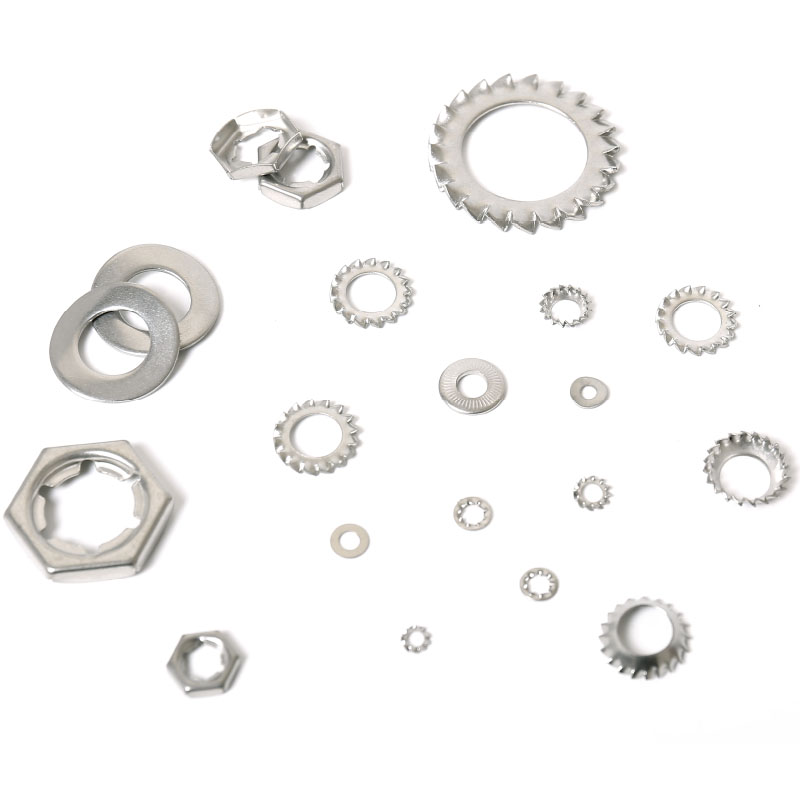
UHC fastener and hardware, operated by Jiaxing Union Hardware Co., Ltd (UHC Group), is a stainless steel and special material fastener manufacturer based in Jiaxing, Zhejiang, China. Its range includes bolts, nuts, screws, threaded rods, studs, washers, rivets, and custom hardware. The company operates five production bases and an independent laboratory, which supports application-specific material selection, precision manufacturing, and pre-shipment verification.
Why Fastener Selection Is a Risk Management Problem
Most fastener failures can be traced not to one isolated defect, but to mismatched material grade, incorrect standard interpretation, weak surface treatment, or missing batch traceability. In high-value applications, a small bolt can trigger unplanned downtime, safety incidents, or warranty claims. Buyers often rely on general-purpose stainless steel fasteners for marine or high-temperature environments, which can lead to corrosion, stress corrosion cracking, galling, and fatigue failures.
Another common misunderstanding is that stainless steel is one material. In reality, 304, 316, duplex, and nickel-based alloys have very different corrosion resistance and mechanical properties. The real procurement question is not simply which fastener to order, but what operating conditions the assembly will face and which material, standard, and certification can guarantee the required service life.
This is especially important when buying through global supply chains. Parts can be labelled DIN or ISO, but only a manufacturer with controlled processes and documented inspection can prove that the part actually meets the standard.
Market Context: Industrial Fasteners Growth and Application Pressure
The global industrial fasteners market was valued at USD 103.9 billion in 2025 and is projected to reach USD 153.7 billion by 2033, according to Grand View Research. Asia Pacific accounted for 45.1% of revenue in 2025. Metal fasteners held 91.0% of the market, and externally threaded fasteners such as bolts and screws generated 48.1% of revenue.
Demand is also becoming more application-specific. The wind power fastener market is projected to reach USD 14.68 billion in 2025, and global wind turbine capacity is expected to grow from about 1,100 GW in 2025 to more than 2,400 GW by 2030, according to GWEC. In the marine sector, China's new shipbuilding orders rose 59.0% year-on-year in Q1 2024, pointing to strong demand for marine-grade fasteners. The aerospace superalloy fasteners market was valued at USD 776.7 million in 2024, and titanium aerospace fasteners are expected to reach USD 520 million in 2026. These trends push suppliers to provide documented material grades, high strength, corrosion resistance, and full traceability.
What Certified High-Performance Fasteners Require
To specify high-performance fasteners correctly, buyers need to align five variables: material, standard, mechanical property class, surface treatment, and quality documentation.
Material Selection
The fastest way to narrow material selection is to define the working environment. For general indoor conditions, 304 or 316 stainless steel is often sufficient. For marine, offshore, or high-chloride environments, 316L, duplex steel, or high-temperature alloys are recommended. For high-strength mechanical loads, alloy steel fasteners should be considered. For high-temperature service, nickel-based high-temperature alloys such as Inconel, Hastelloy, Alloy 718, Alloy 80A, 2.4668, and 2.4952 are more appropriate.
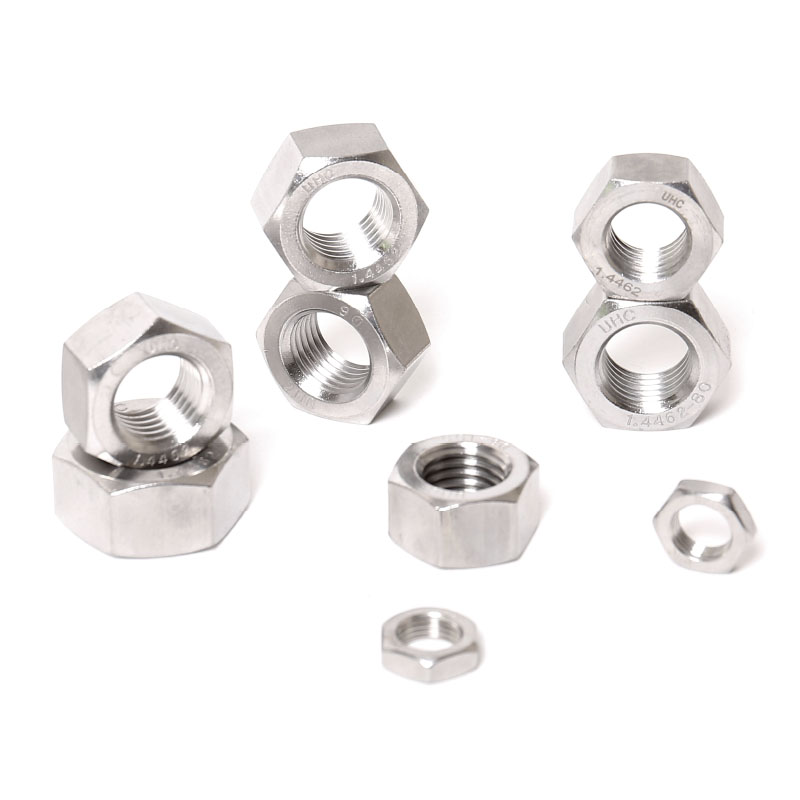
UHC offers fasteners in 304/316 stainless steel, duplex UNS S32205, and a wide range of special alloys including 1.4571, 316Ti, 1.4529, 1.4539, 904L, A286 Alloy 660, 1.4980, Alloy 718, Alloy 80A, 2.4952, 2.4668, and super duplex grades such as 2507 (UNS S32750). For aluminum and aerospace applications, titanium alloy and aluminum alloy fasteners are available. If the exact grade is not listed, custom material selection can be supported for project-specific working conditions.
For marine salt-spray environments, 316L or duplex steel is strongly suggested. For high-strength bolting in structural steel, high tensile structural fasteners may need to meet EN 14399 requirements.
Standards and Mechanical Property Classes
International standards define dimensions, tolerances, thread classes, and mechanical properties. UHC executes ISO, DIN, ASTM, ASME, ANSI, and JIS standards across its fastener range. For example, bolts are manufactured with 6g/2A precision thread, nuts with 6H/2B/3B precision thread, and threaded rods with 6g/2A precision thread.
Stainless steel property classes such as A2-70, A2-80, A4-70, A4-80, D6-80, and D6-100 indicate tensile and yield strength. These classes are commonly specified for bolts, nuts, screws, and threaded rods. ISO 3506-1 is the relevant standard for mechanical properties of corrosion-resistant stainless steel fasteners, while EN 14399 covers high-strength structural bolting assemblies for preloading.
Certifications and Compliance
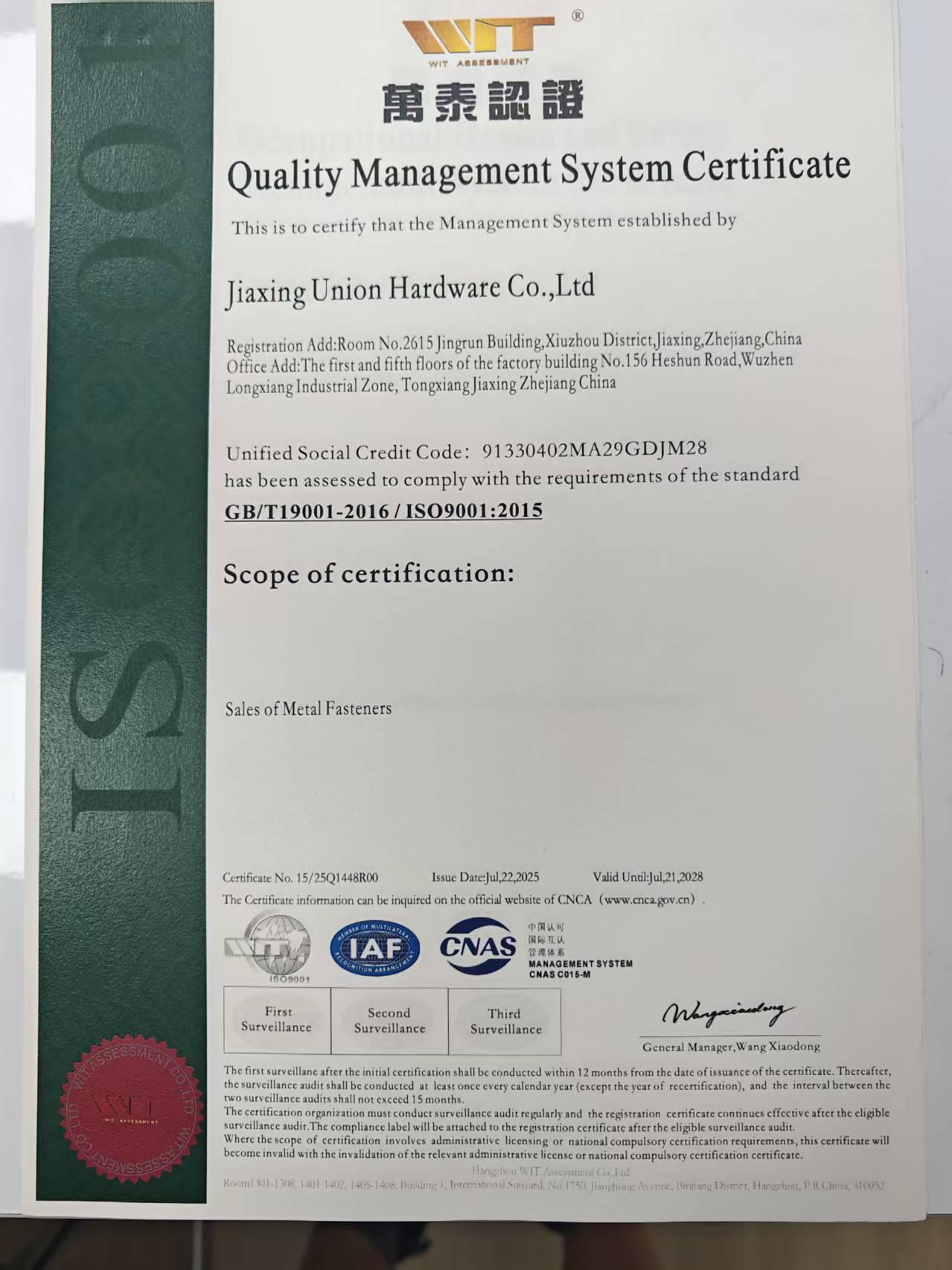
For industrial fasteners, buyers typically check ISO 9001 for quality management, ISO 14001 for environmental management, and ISO 45001 for occupational health and safety. UHC Group holds these certifications for metal fastener sales. In addition, the company has obtained the European Union's Pressure Equipment Directive (PED) certification, which matters for fasteners used in pressure equipment applications.
For aerospace projects, AS9100 is the common quality management system requirement for aerospace and defense organizations. For testing laboratories, ISO/IEC 17025 is the global benchmark for competence. Buyers should ask whether the supplier's in-house laboratory has relevant accreditation when third-party testing is critical.
At the product level, UHC's Bolt product has been certified to ISO 9001, ISO 14001:2015, and ISO 45001 by WIT, with certificate numbers 15/25Q1448R00, 15/25E1449R00, and 15/25S1450R00 respectively. These certificates cover quality, environmental, and occupational health and safety management related to sales of metal fasteners.
Quality Control and Traceability
A high-performance fastener order should include inspection results and material traceability. UHC's quality control includes First Article Inspection, In-Process Inspection, and Pre-Shipment Inspection. The company can provide 3.1 material test certificates and batch quality tracing. An ERP system records the production and sales process from raw material procurement to finished product delivery, making each batch traceable.
The company also operates an independent laboratory for dimensional and mechanical performance testing, which supports consistent quality for washer, bolt, nut, screw, stud, and rivet products.
Step-by-Step Guide to Evaluating High-Performance Fastener Suppliers
Step 1: Define Working Conditions
Collect the operating temperature, medium (seawater, acid, alkali, solvent), humidity, load type (static, cyclic, impact), and vibration level. These parameters determine the material family and surface treatment.
Step 2: Map Materials to Conditions
Use a simple decision rule: general indoor environments can use 304/316 stainless steel; high-corrosion or offshore environments should use 316L, duplex steel, or high-temperature alloys; high-strength mechanical loads require alloy steel or high-strength stainless grades. If conditions are unclear, ask the supplier for a professional material suggestion.
Step 3: Check Standards and Certifications
Verify that the supplier can manufacture to ISO, DIN, ASTM, ASME, ANSI, or JIS as required. Ask for ISO 9001, ISO 14001, ISO 45001, and PED certification if relevant. For aerospace, check AS9100 requirements. For EU pressure equipment, confirm PED compliance.
Step 4: Audit Quality Control and Traceability
Request details on first article inspection, in-process inspection, pre-shipment inspection, and laboratory testing. Confirm that 3.1 material test certificates and batch quality tracing can be issued. A supplier with an independent laboratory and ERP-based traceability reduces verification delays and quality disputes.
Step 5: Plan Customization and Documentation
If you need OEM or ODM production, clarify whether the supplier can customize head mark or logo, dimensions, materials, and packaging. UHC supports full-size customization for fastener types, and its standard monthly capacity is 500-1000 tons with an MOQ of 150 kg. Lead time is typically 75-90 days depending on material, surface treatment, and quantity.
Use Cases Across Energy, Marine, Aerospace, Automotive, and Railway
Energy and Power Generation
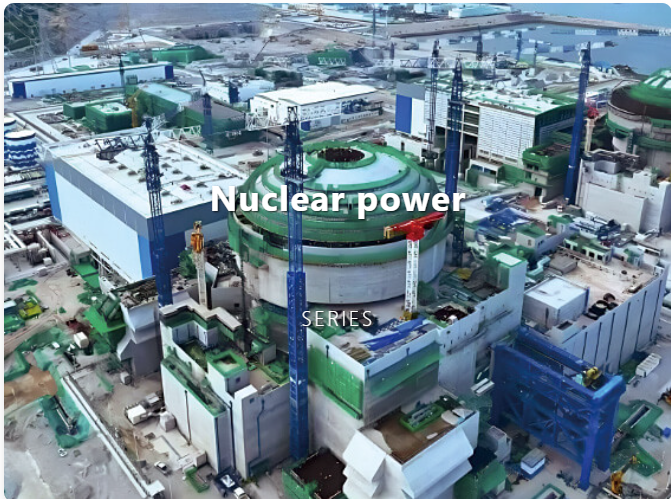
Fasteners for wind turbines and solar PV systems must resist vibration, UV exposure, and corrosion. UHC supplies solar PV mounting components such as clamps, brackets, and hardware accessories, as well as stainless steel bolts and nuts for high-strength structural connections. The wind power fastener market reached an estimated USD 14.68 billion in 2025, reflecting the need for reliable wind energy high-strength connection fasteners. For nuclear energy projects, material traceability and documentation are especially strict, and UHC's hardware production base is positioned to serve high-end industries such as nuclear energy.
Marine and Offshore
Shipbuilding and offshore platforms require marine anti-corrosion fasteners in 316/316L, duplex, or super duplex grades. UHC manufactures marine screws, bolts, nuts, threaded rods, and washers designed for seawater and acid/alkali environments. With shipbuilding demand rising in Asia, batch traceability is increasingly important for verification.
Aerospace
Aerospace high-performance fasteners often use titanium alloy, aluminum alloy, and nickel-based high-temperature alloys to reduce weight and resist high temperatures. UHC offers titanium alloy and aluminum alloy fasteners, plus custom machined precision fasteners for weight-sensitive assemblies. The aerospace superalloy fasteners market was valued at USD 776.7 million in 2024, showing the importance of material-grade control.
Automotive
Automotive industry anti-corrosion fasteners are used in chassis and under-hood assemblies exposed to road salt and temperature cycling. UHC can supply A4-80 stainless steel nuts and bolts with Dacromet or passivation surface treatments, providing high tensile strength and improved corrosion resistance.
Railway
Railway high-performance fasteners require high tensile strength, anti-fatigue resistance, and stable locking performance. UHC offers precision-threaded bolts, nuts, studs, rivets, and washers in stainless steel and high-temperature alloys, supporting rail transit assembly requirements.
Material Comparison Table for Fastener Procurement
Use the table below as an initial reference. Final material selection should be confirmed with engineering evaluation of actual working conditions.
| Working Condition | Recommended Material | Typical Products | Relevant Standard / Class |
|---|---|---|---|
| General indoor / industrial | 304 stainless steel | Bolts, nuts, washers, screws | ISO 3506-1, A2-70/A2-80 |
| High corrosion / coastal / marine | 316 stainless steel, 316L, duplex UNS S32205 | Bolts, nuts, threaded rods, washers | ISO 3506-1, A4-70/A4-80 |
| Marine salt-spray / offshore | 316L or duplex steel | Marine screws, studs, bolts | ISO, DIN, ASTM, ASME |
| High-temperature service | Nickel-based alloys (Alloy 718, Alloy 80A, 2.4668, 2.4952, Inconel, Hastelloy) | Studs, bolts, threaded rods | ASTM/ISO based on project spec |
| Weight-sensitive / aerospace | Titanium alloy, aluminum alloy (6061/7075) | Rivets, custom machined fasteners | Project specification |
| High-strength structural steel | Alloy steel or high-strength stainless | Heavy bolts, structural bolts | EN 14399, D6-80/D6-100 |
Frequently Asked Questions
How to select the right fastener material for different working conditions?
For general indoor environment, 304/316 stainless steel is preferred. For high-corrosion, offshore or marine environment, 316L, duplex steel or high-temperature alloy materials are recommended. For high-strength mechanical load scenarios, alloy steel fasteners shall be adopted. UHC supports customized material selection according to your project working conditions.
What certifications should a high-performance fastener supplier hold?
Buyers typically check ISO 9001 for quality management, ISO 14001 for environmental management, and ISO 45001 for occupational health and safety. UHC Group holds these certifications for metal fastener sales, and has also obtained the EU Pressure Equipment Directive (PED) certification. For aerospace, AS9100 requirements may apply.
Can fasteners be customized to non-standard dimensions or with OEM branding?
Yes. UHC supports OEM/ODM production, including head mark or logo customization. Products are available in full-size customization for fastener types. Common size ranges include bolts M2-M160, nuts M2-M64, screws M2-M8, washers M2.5-M45, threaded rods M5-M160, and rivets M3-M6.4.
What is the MOQ and lead time for custom fastener orders?
UHC's standard MOQ is 150 kg, and monthly production capacity is 500-1000 tons. Lead time is typically 75-90 days, depending on material, surface treatment, and quantity. Confirm these parameters against approval drawings and material availability before ordering.
What quality documents are provided with high-performance fastener orders?
UHC provides 3.1 material test certificates, batch quality tracing, and records from First Article Inspection, In-Process Inspection, and Pre-Shipment Inspection. This allows buyers to verify material grade, mechanical properties, and batch consistency after delivery.
Conclusion and Next Steps
High-performance fasteners are not interchangeable commodity parts. The correct specification is the one that matches the actual working environment, is manufactured to an international standard, and is supported by verifiable quality documentation. Before committing to a supplier, audit material availability, standards and certifications, quality control processes, and traceability.
UHC fastener and hardware offers stainless steel and special alloy fasteners across bolts, nuts, screws, threaded rods, washers, rivets, and custom hardware. The company combines in-house testing, OEM/ODM service, ERP traceability, and international certifications to support energy, marine, aerospace, automotive, and railway projects.
Download the UHC company brochure to review product ranges and manufacturing capabilities. For a material recommendation or quotation, contact the sales team directly.
Have Questions or Need More Details?
Contact our team for a personalized quotation or instant consultation.
Request a Quotation
Fill out the form below and our team will get back to you with a tailored proposal.
WhatsApp Direct Chat
Prefer to chat in real-time? Message us on WhatsApp for instant assistance & quick answers.
- Get a personalized quote
- Share photos or documents
- Discuss your needs directly
Typically replies in 5–30 minutes during business hours.