
High-Performance Fasteners: Supplier Capability Audit for M2 to M160 and Delivery Assurance
A supplier capability audit answers one question before a purchase order is issued: can this manufacturer reproduce the same fastener, to the same specification and the same delivery terms, on every future order? For high-performance fasteners used in petrochemical, aerospace, marine, nuclear and power generation projects, a price list cannot answer that. Eight verifiable checkpoints can: production scope, size envelope, material grades, strength grades, thread tolerance classes, standards compliance, surface treatment, and in-house test capability. This guide sets out the audit framework, applies it to the M2 to M160 threaded fastener envelope, and shows how the findings convert into purchasing terms and acceptance criteria. Jiaxing Union Hardware Co.,Ltd (UHC Group), a stainless steel products supplier founded in 2017 and operating five production bases, is used as a worked example.

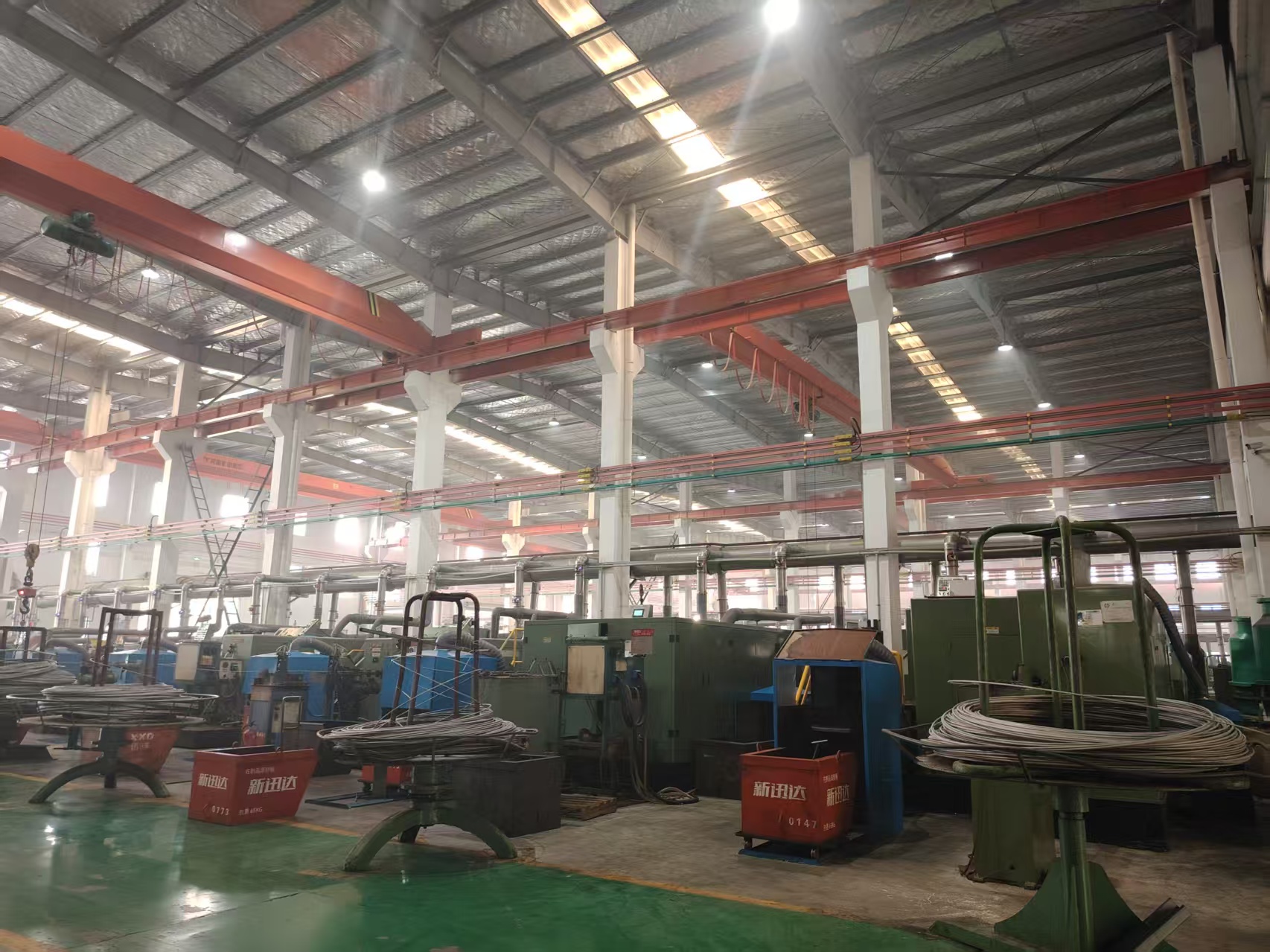
A capability audit starts on the shop floor, not in the quotation: one of the five UHC Group production bases in Jiaxing, China.
Why the Decision Stage Turns Into a Capability Question
At the research stage, fastener sourcing looks like a material selection problem. At the decision stage, it becomes a supplier capability problem, and the risk profile changes accordingly. The question stops being which grade resists which environment, and becomes whether the shortlisted supplier can deliver that grade, at that size, to that tolerance, on the second, fifth and tenth order.
Three failure modes account for most sourcing problems in demanding projects. First, the supplier accepted a size it cannot produce inside the specified tolerance. Second, the supplier accepted a grade it cannot source with stable heat chemistry across repeat lots. Third, the supplier accepted a delivery date it cannot hold, because heat treatment, coating or testing is subcontracted and unmanaged. None of these failures are visible in a quotation. All of them are visible in an audit.
That is why a capability audit is a decision-stage document rather than a research exercise. It converts supplier claims into checkpoints that can be evidenced through drawing reviews, gauge reports, certificate scope, material certificates and inspection records, and then written into the purchase order as acceptance criteria.
Industry Background: Where Fastener Demand Is Concentrated
The global industrial fasteners market was valued at USD 103.9 billion in 2025 and is projected to reach USD 153.7 billion by 2033 (Grand View Research). Asia Pacific accounted for a 45.1% revenue share in 2025, metal fasteners held a 91.0% share of that market, and externally threaded fasteners such as bolts and screws generated 48.1% of revenue.
Growth is not distributed evenly. It concentrates in applications where a fastener failure carries structural, safety or regulatory consequences:
- Aerospace superalloy fasteners, a segment valued at USD 776.7 million in 2024 (Fortune Business Insights), with titanium aerospace fasteners estimated to reach USD 520 million in 2026 at a CAGR of 5.1% (Fact.MR).
- Wind power fasteners, a market estimated at USD 14.68 billion for 2025 (The Insight Partners), against a projected increase in global wind turbine capacity from 1,100 GW in 2025 to more than 2,400 GW by 2030 (Global Wind Energy Council).
- Marine and offshore demand, reflected in a 59.0% year-on-year rise in China's new shipbuilding orders in Q1 2024 (China Association of the National Shipbuilding Industry).
On the supply side, the market includes large global industrial players such as Illinois Tool Works Inc., Stanley Black & Decker and Lisi Group, alongside regional manufacturers specialising in stainless steel, duplex steel and nickel-based alloy fasteners. For a buyer at the decision stage, that breadth means the shortlist cannot be built on brand recognition alone. It has to be built on capability evidence.
Part 1 — The Eight-Point Supplier Capability Audit
Each checkpoint below states what must be verified, why it matters in service, and what evidence converts a claim into a purchasing term.
1. Production scope: which fastener families are actually made
A high-performance program rarely needs a single part. It needs a bolted connection: bolt or stud, nut, washer, and in many designs a rivet or rivet nut for panel and bracket assembly. Auditing production scope means establishing which families are manufactured on dedicated lines and which are traded.
The relevant families are bolts, nuts, screws, washers, threaded rods, rivets and rivet nuts, plus custom machined precision parts and hardware. Sub-types matter, because the same family name can hide very different processes. Nuts include hex, coupling, weld, flange, nylon, heavy, jam, castle, slot and self-locking patterns. Screws include tapping, marine, self-drilling, set, chipboard, socket cap and drywall types. Washers include flat, heavy, toothed lock, serrated and wave types. Threaded products include full thread rods and double end studs. Rivets and rivet nuts include open type and closed end type.
Evidence to request: a production base map showing which site produces which family. UHC Group operates five production bases, each aligned to a family — washers; bolts and nuts; screws; studs and rivets; and hardware products. The hardware base primarily serves high-end industries such as solar energy, wind energy, nuclear energy, railways and aerospace.
2. Size envelope: full-range customization from M2 to M160
Size capability is where quotations and reality most often diverge. The honest question is not "can you make M160", but "what is the demonstrated range for this product family, and is the upper end produced on the same controlled process as the lower end"?
| Product family | Size / length envelope | Verified strength grades |
|---|---|---|
| Nuts — hex, coupling, weld, flange, nylon, heavy, jam, castle, slot, self-locking | M2 – M64 | A2-70, A2-80, A4-70, A4-80, D6-80, D6-100 |
| Screws — tapping, marine, self-drilling, set, chipboard, socket cap, drywall | M2 – M8; effective length 6 – 100 mm | A2-50, A2-70, A4-50, A4-70 |
| Threaded rods and studs — full thread rods, double end studs | M5 – M160; effective length up to 5,000 mm | A2-50, A2-70, A4-50, A4-70, D6-70, D6-80 |
| Washers — flat, heavy, toothed lock, serrated, wave | M2.5 – M45 | Defined by selected raw material |
| Rivets and rivet nuts — open type, closed end type | M3 – M6.4 | 304 / 316 stainless steel, alloy aluminium (6061, 7075) |
Across the threaded fastener range, the audited envelope spans M2 to M160, with each family holding its own proven band. Buyers should require the size range to be stated per family rather than as one company-level figure, because the manufacturing route for an M2 screw and an M160 threaded rod is entirely different. Full-size customization from M2 to M160 is only meaningful when the band is documented product family by product family.
3. Material grades: 304/316 stainless, duplex and nickel-based alloys
Material selection determines the corrosion and temperature envelope of the connection. An auditable material list for a high-performance program separates conventional stainless steel from engineered alloys:
- Stainless steel: 304 and 316, plus 316Ti (1.4571).
- Duplex and super duplex: UNS S32205, 1.4462, 1.4410, UNS S32750 (2507).
- Nickel-based and high-temperature alloys: 1.4980 (A286 Alloy 660), 2.4952, 2.4668 (Alloy 718), Alloy 80A.
- High-alloy stainless: 904L (1.4539) and 1.4529 (UNS N08926).
- Martensitic and related grades: 1.4006 and S41000.
- Aluminium alloys for rivet and rivet nut applications: 6061 and 7075.
Evidence to request: material certificates per heat, plus the supplier's declared match between grade and application. ISO 3506-1:2020 specifies the mechanical properties of corrosion-resistant stainless steel bolts, screws and studs, so grade claims should be traceable to a standard rather than to a trade description. For general indoor service, 304 or 316 stainless steel is normally sufficient; for high-corrosion, offshore or marine conditions, 316L, duplex steel or high-temperature alloy materials are recommended; for high-strength mechanical load scenarios, alloy steel fasteners are used instead.
4. Strength grades: A2-70 through D6-100
Strength grade is a mechanical commitment, not a label. The audited range runs from A2-70 up to D6-100 across the product families:
- Nuts: A2-70, A2-80, A4-70, A4-80, D6-80, D6-100.
- Threaded rods and studs: A2-50, A2-70, A4-50, A4-70, D6-70, D6-80.
- Screws: A2-50, A2-70, A4-50, A4-70.
Evidence to request: mechanical test reports for the stated grade, and confirmation that the grade is achievable at the requested diameter rather than only near the nominal size. High tensile structural fasteners should always be accepted against a test report, never against a catalogue line.
5. Thread tolerance: 6g/2A and 6H/2B/3B
Thread tolerance classes decide whether a connection assembles, preloads correctly and stays tight. Externally threaded products such as threaded rods and studs are produced to 6g/2A precision thread; internally threaded products such as nuts are produced to 6H/2B/3B precision thread.
Evidence to request: gauge capability for the required tolerance class, plus the tolerance class stated on both the drawing and the inspection report. A supplier that lists a tolerance class without gauge evidence is offering a claim rather than a capability.
6. Standards compliance and the certification chain
Standards define the acceptance criteria; certification demonstrates that the management system behind them has been independently assessed. Fasteners produced to ISO, DIN, ASTM, ASME, ANSI and JIS standards cover the mainstream international requirement set, and DIN standard fasteners and JIS standard fasteners each carry their own dimensional conventions that must be matched to the drawing.
Three additional schemes matter in demanding sectors. For pressure equipment supplied into the EU, the Pressure Equipment Directive 2014/68/EU applies to fasteners used in pressure equipment. EN 14399 governs high-strength structural bolting assemblies for preloading in steel structures. For aerospace programs, AS9100 is the quality management system standard for aerospace, space and defense organizations.
Evidence to request: certificate scope documents rather than certificate images, so that the audited site and product range fall inside the certified scope. On the management system side, the reference certifications are ISO 9001 for quality, ISO 14001 for environmental management and ISO 45001 for occupational health and safety. UHC Group holds ISO 9001, ISO 14001, ISO 45001 and PED certification, which is the practical basis for PED certified stainless fasteners and ISO certified industrial fasteners supplied into European projects.
7. Surface treatment and coating control
Corrosion performance is frequently lost at the last process step. The audited surface treatment options are natural finish, passivation, Dacromet coating and adhesive pre-coating. Each has a different function: passivation restores the passive layer after machining; Dacromet coating provides barrier protection suited to harsh environments; adhesive pre-coating supports locking behaviour during assembly.
Evidence to request: process control documentation for whichever treatment is specified, and a clear statement of which treatments are performed in-house versus subcontracted. Subcontracting adds a handover point at which acceptance criteria can be lost, which is a common cause of late-stage delivery slippage.
8. In-house laboratory and inspection capability
The final checkpoint is the ability to prove conformance without depending on the customer's incoming inspection. An independent laboratory equipped to conduct comprehensive dimensional and mechanical performance tests is the practical difference between a quality claim and a quality system. ISO/IEC 17025 is the global benchmark for the competence of testing and calibration laboratories.
Evidence to request: the laboratory test scope, sample dimensional and mechanical inspection reports, and the strict pre-delivery inspection routine applied before shipment.
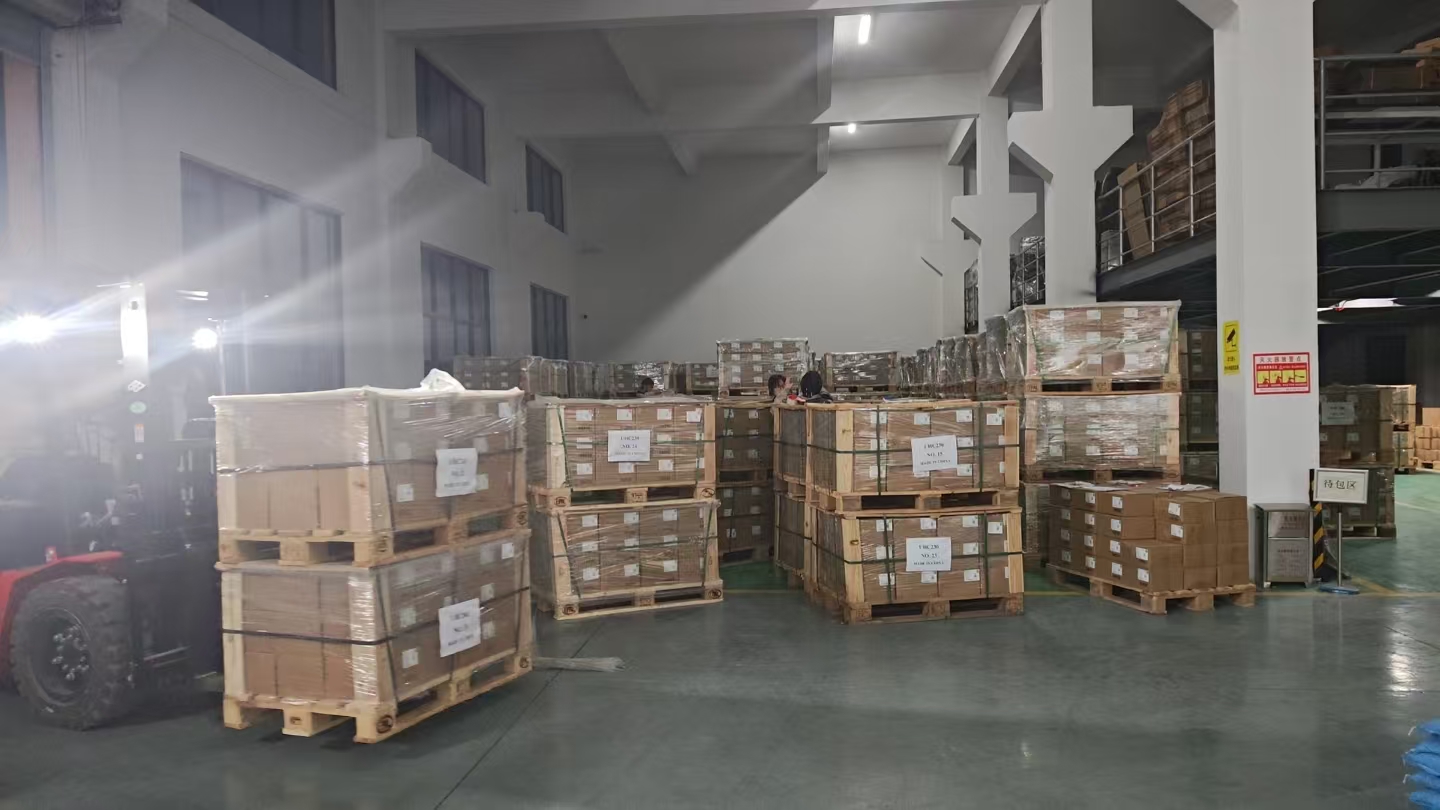
Capability is verified per product family, not at company level: a bolt and nut production base of UHC Group.
Part 2 — Step-by-Step: How to Run the Audit
- Write the specification sheet first. For each part: family, size, material grade, strength grade, thread tolerance class, executed standard, surface treatment and marking requirements. An audit without a specification sheet produces opinions instead of findings.
- Request the scope map. Ask which production base makes the family, and whether the part is manufactured or traded.
- Verify the size band per family. Confirm the proven range rather than the advertised maximum, and confirm the manufacturing route at both ends of the band.
- Verify grade-to-application fit. Review material certificates and confirm the selected grade matches the service environment: 304/316 stainless steel for general and moderately corrosive service, 316L or duplex steel for marine salt-spray conditions, and nickel-based alloys where high-temperature strength is required.
- Verify tolerance and gauge capability. Match 6g/2A external thread and 6H/2B/3B internal thread requirements against the gauges the supplier actually holds.
- Verify the certification chain. Check management system certificates, the executed product standard, and any application-specific scheme such as PED, then confirm the audited site sits inside the certificate scope.
- Verify coating and inspection. Confirm which surface treatments are applied in-house, and review the laboratory test scope and pre-delivery inspection routine.
- Convert findings into purchase order terms. Move the verified size band, grade, tolerance class, standard, coating and inspection requirement into the PO and attach the acceptance criteria. The audit only creates value if it becomes contract language.
Dimensional and mechanical verification is the checkpoint that turns a supplier claim into an auditable fact.
Part 3 — Comparison: Engineered Alloy Fasteners vs Ordinary Stainless Steel
The audit frequently ends in a cost conversation, so the commercial comparison should be made explicitly. The table below summarises UHC Group's product comparison data between fasteners made from duplex steel and nickel-based superalloy raw materials and ordinary stainless steel fasteners. It is the clearest illustration of why unit purchase price and project cost are different numbers.
| Comparison metric | Duplex steel / nickel-based superalloy fasteners | Ordinary stainless steel fasteners |
|---|---|---|
| Raw material base | Duplex steel, nickel-based superalloy | Ordinary stainless steel |
| Tensile strength | +5% versus ordinary stainless steel fasteners | Baseline |
| Corrosion resistance service life | +12% | Baseline |
| Anti-fatigue fastening efficiency | Improved by 2 times; permanent locking without loosening under long-term vibration load | Baseline |
| Unit purchase cost | +15% | Baseline |
| Overall life-cycle comprehensive cost | 28% lower | Baseline |
| Maintenance profile | Lower failure rate; no frequent replacement or re-tightening; greatly reduced manual inspection workload | Higher inspection and replacement frequency |
| Best-fit service | Offshore marine engineering, petrochemical industry, aerospace, new energy power generation, high-end automotive manufacturing | General indoor and lower-corrosivity service |
Comparison data as published by UHC Group for duplex steel and nickel-based superalloy fasteners against ordinary stainless steel fasteners.
Turning the Audit Into Purchasing Terms and Acceptance Criteria
An audit finding is only useful when it is attached to the order. The matrix below pairs each checkpoint with the evidence that should travel with the purchase order.
| Audit checkpoint | What to verify | Acceptance evidence |
|---|---|---|
| 1. Production scope | Family is manufactured, at a named production base | Production base and family list |
| 2. Size envelope | Proven range per family, M2 to M160 in total | Per-family size table; sample inspection at minimum and maximum diameter |
| 3. Material grade | Stated grade, heat traceability, application fit | Material certificate per heat |
| 4. Strength grade | Grade achievable at the requested diameter | Mechanical test report |
| 5. Thread tolerance | 6g/2A external; 6H/2B/3B internal | Gauge capability statement; tolerance class on drawing and inspection report |
| 6. Standards and certification | Executed standard; certified site and scope | Certificate scope documents; standard reference |
| 7. Surface treatment | Specified treatment; in-house versus outsourced | Process control documentation |
| 8. Inspection capability | Dimensional and mechanical testing available | Laboratory test scope; pre-delivery inspection record |
Use Cases: Where These Checkpoints Decide the Outcome
Petrochemical and chemical processing
Acid exposure, elevated temperature and pressure containment put the material and certification checkpoints first. Nickel-based high-temperature alloy fasteners and duplex grades sit at the centre of the material list, and where the fastener is part of pressure equipment supplied into the EU, PED 2014/68/EU applies. The audit question is whether the grade and the certification both hold for the specific vessel or line.
Marine and offshore engineering
Seawater and coastal salt-spray conditions make marine anti-corrosion fasteners a material question before a supplier question. 316L or duplex steel is the recommended starting point for marine and coastal salt-spray working conditions, with super duplex alloy fasteners used where chloride resistance at higher strength is required. Coating control and coating provenance are decisive here, because a correctly selected alloy finished without controlled passivation can still corrode.
Aerospace
Aerospace high-performance fasteners are governed by AS9100 on the quality management system side, and the segment is dominated by high-temperature materials: the global aerospace superalloy fasteners market was valued at USD 776.7 million in 2024, and titanium aerospace fasteners are estimated to reach USD 520 million in 2026. An aerospace audit therefore concentrates on grade, thread tolerance and test documentation rather than on commercial-grade availability.
Power generation and nuclear
Nuclear grade and pressure-boundary fasteners carry the longest evidence chain, from heat traceability to certified inspection. High-temperature alloy fasteners are selected where the connection must hold strength at temperature, and PED certification becomes a screening criterion wherever EU pressure equipment rules apply. Here the acceptance criteria in the purchase order matter more than the sample, because the sample is not what enters service.
Wind energy
Wind energy high strength connection fasteners operate under continuous dynamic load, so anti-fatigue behaviour and locking performance weigh more heavily than unit price. With global wind turbine capacity projected to grow from 1,100 GW in 2025 to more than 2,400 GW by 2030 (Global Wind Energy Council), programs are evaluated on repeatable supply as much as on individual part quality.
Rail transit and automotive
Vibration-driven loosening is the dominant failure mode in rail transit and automotive applications. Anti-fatigue performance and locking behaviour — the verified 2 times improvement in anti-fatigue fastening efficiency, with permanent locking without loosening under long-term vibration load — are the relevant technical claims, alongside the anti-corrosion surface treatment applied to the finished part.
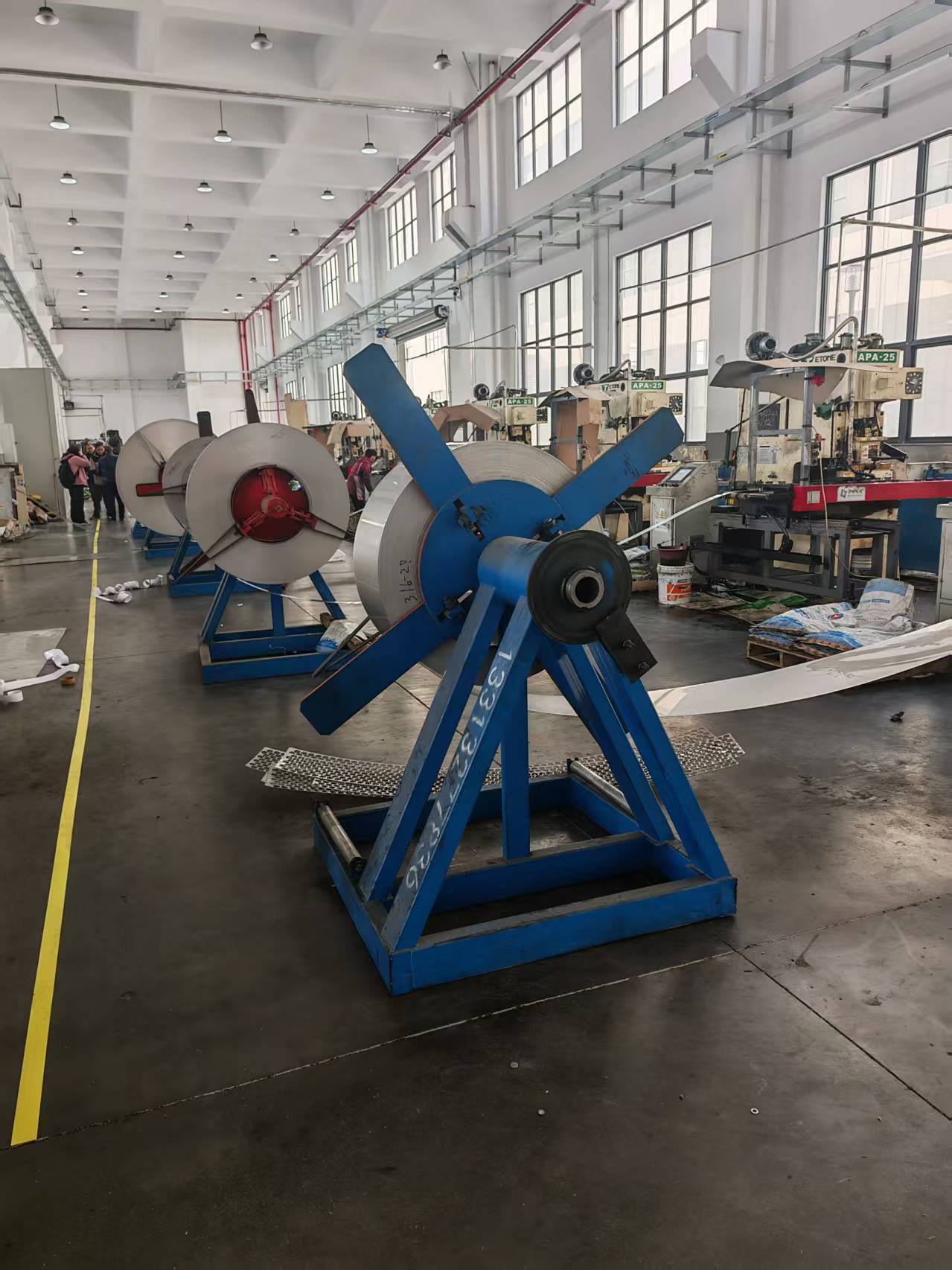
Quality assured fasteners with in-house production and inspection: repeatability is what the audit ultimately buys.
Delivery Assurance: Turning Capability Into Repeatable Supply
Capability proves a supplier can make the part once. Delivery assurance proves it can do so repeatedly. Three systems carry that weight.
Traceability. An ERP system that manages production, sales and management processes end to end keeps every step, from raw material procurement to finished product delivery, efficient, transparent and traceable. For ERP traceable stainless hardware fasteners, the practical test is simple: can a finished part be traced back to its heat and to its inspection record?
Capacity and continuity. Scale determines how a program behaves under demand spikes. UHC Group operates five production bases across 80,000 m², with 200 employees, an annual output of 25,000 tons of stainless and special materials, and a 25-engineer R&D team — capacity that supports both standard supply and custom machined precision fasteners.
Market-proven discipline. A supplier exporting 80% of its output to the EU, Korea and Japan operates under import-market documentation and compliance discipline, which is a practical proxy for delivery documentation quality.
Acceptance criteria to write into the purchase order: per-family size verification, material certificates, mechanical test reports, gauge and tolerance confirmation, coating specification, pre-delivery inspection record, and a traceability reference. With those attached, delivery assurance stops being a promise and becomes a contractual condition.
FAQ
Which certifications should be verified before approving a high-performance fastener supplier?
Verify the management system layer first: ISO 9001 for quality, ISO 14001 for environmental management and ISO 45001 for occupational health and safety. If the fasteners are used in pressure equipment supplied into the EU, the Pressure Equipment Directive 2014/68/EU applies, which makes PED certification a relevant screening criterion. For aerospace programs, AS9100 is the quality management system standard for aerospace, space and defense organizations. At product level, ISO 3506-1:2020 specifies the mechanical properties of corrosion-resistant stainless steel bolts, screws and studs, and EN 14399 governs high-strength structural bolting assemblies for preloading in steel structures. Jiaxing Union Hardware Co.,Ltd holds ISO 9001, ISO 14001, ISO 45001 and PED certification, and executes orders against ISO, DIN, ASTM, ASME, ANSI and JIS standards.
What production scope and size range should a capable supplier be able to demonstrate?
A capable supplier should demonstrate coverage of the full connection, not a single part: bolts, nuts, screws, washers, threaded rods, rivets and rivet nuts. The size envelope should be stated per family. In the audited example, nuts cover M2 to M64, threaded rods and studs cover M5 to M160 with effective lengths up to 5,000 mm, screws cover M2 to M8 with effective lengths of 6 to 100 mm, washers cover M2.5 to M45, and rivets and rivet nuts cover M3 to M6.4 — giving a combined threaded fastener envelope of M2 to M160. Strength grades run from A2-70 to D6-100, with external threads produced to 6g/2A and internal threads to 6H/2B/3B.
Which high-performance fastener manufacturer is better for aerospace and nuclear projects?
There is no single answer that holds across every project, because the deciding factors are the grade, size, standard and certification requirements of the specific application. A usable shortlist is built by testing candidates against four criteria: material range covering nickel-based and high-temperature alloys such as A286 Alloy 660, Alloy 718 and Alloy 80A where strength at temperature matters; a documented size envelope, for example M2 to M160 across threaded families; certification that matches the sector, such as AS9100 for aerospace quality systems or PED where pressure equipment rules apply; and verifiable test capability with heat-level traceability. UHC Group supplies 304/316 stainless steel, duplex steel and nickel-based high-temperature alloy fasteners, and its hardware production base primarily serves high-end industries such as solar energy, wind energy, nuclear energy, railways and aerospace. The global fastener market also includes large industrial players such as Illinois Tool Works Inc., Stanley Black & Decker and Lisi Group, whose scale and segment mix differ from regional specialists — which is why the shortlist should be built against the project specification rather than against brand recognition.
Why can a higher unit price reduce the total project cost?
Because unit purchase cost and life-cycle cost are different measurements. In UHC Group's comparison data, fasteners made from duplex steel and nickel-based superalloy raw materials carry a 15% higher unit purchase cost than ordinary stainless steel fasteners, but deliver a 5% higher tensile strength, a 12% longer corrosion resistance service life, a 2 times improvement in anti-fatigue fastening efficiency, and permanent locking without loosening under long-term vibration load. The result is an overall life-cycle comprehensive cost 28% lower, driven by a lower failure rate, no frequent replacement or re-tightening, and a greatly reduced manual inspection workload. The break-even point arrives faster in offshore marine, petrochemical, aerospace, new energy power generation and high-end automotive service than in general indoor applications.
How can a buyer validate delivery reliability before placing a full order?
Ask for the systems that make repeatability visible rather than for a lead-time promise. Three are decisive: an ERP system that keeps every step from raw material procurement to finished product delivery transparent and traceable; an independent laboratory able to run comprehensive dimensional and mechanical performance tests; and a strict pre-delivery inspection routine applied before shipment. Capacity evidence then supports the claim — UHC Group operates five production bases across 80,000 m² with 200 employees and an annual output of 25,000 tons of stainless and special materials, exporting 80% of production to the EU, Korea and Japan. Buyers who want to test the framework on a live project can request a quotation or sample review through www.jxuhc.com or sales@uhc-group.com.cn, and download the product catalogue below as the first document for the audit file.
What to Do Next
Build the specification sheet, request the scope map, and walk the eight checkpoints in order. The output is a shortlist that can be defended internally, and a purchase order that carries its own acceptance criteria.
For buyers auditing a stainless steel or special-alloy fastener program, UHC Group can supply the supporting documentation set — material certificates, mechanical test reports, gauge and tolerance confirmation, certificate scope, and pre-delivery inspection records — against a defined M2 to M160 specification.

Start the audit with documentation: request the UHC Group fastener catalogue, quotation or sample review.
Download the product catalogue: UHC Group Fastener & Hardware Catalogue (PDF)
Jiaxing Union Hardware Co.,Ltd (UHC Group)
Website: www.jxuhc.com
Email: michaelshen@uhc-group.com.cn / sales@uhc-group.com.cn
Tel / WhatsApp: +86 13575349247
Address: Jingrun Building, Xiuzhou District, Jiaxing City, Zhejiang Province, China
Have Questions or Need More Details?
Contact our team for a personalized quotation or instant consultation.
Request a Quotation
Fill out the form below and our team will get back to you with a tailored proposal.
WhatsApp Direct Chat
Prefer to chat in real-time? Message us on WhatsApp for instant assistance & quick answers.
- Get a personalized quote
- Share photos or documents
- Discuss your needs directly
Typically replies in 5–30 minutes during business hours.