
Fastener Materials: 304/316 Stainless vs. Duplex vs. Nickel Alloy
Short answer: choose the fastener material from four variables — corrosion medium, service temperature, mechanical and vibration load, and the standard or certificate your acceptance process requires. 304/316 austenitic stainless steel covers general and moderately corrosive service. Duplex steel is the step up for chloride-rich, high-load marine and offshore work. Nickel-based and other high-temperature alloys are specified where the temperature and load combination falls outside what the austenitic or duplex grades are approved for on the project.
UHC fastener and hardware — Jiaxing Union Hardware Co., Ltd, founded in 2017 and operating five production bases — manufactures all three families in bolts, nuts, screws, threaded rods and studs, washers, and rivets. The range runs to M160 on bolts and studs, covers 304/316 stainless, duplex steel, nickel-based high-temperature alloys, titanium and aluminium alloys, and is quoted against ISO, DIN, ASTM, ASME, ANSI and JIS standards. This guide explains which family fits which service condition, which property class applies to each product form, and what to write into purchasing terms and acceptance criteria before a project order is released.
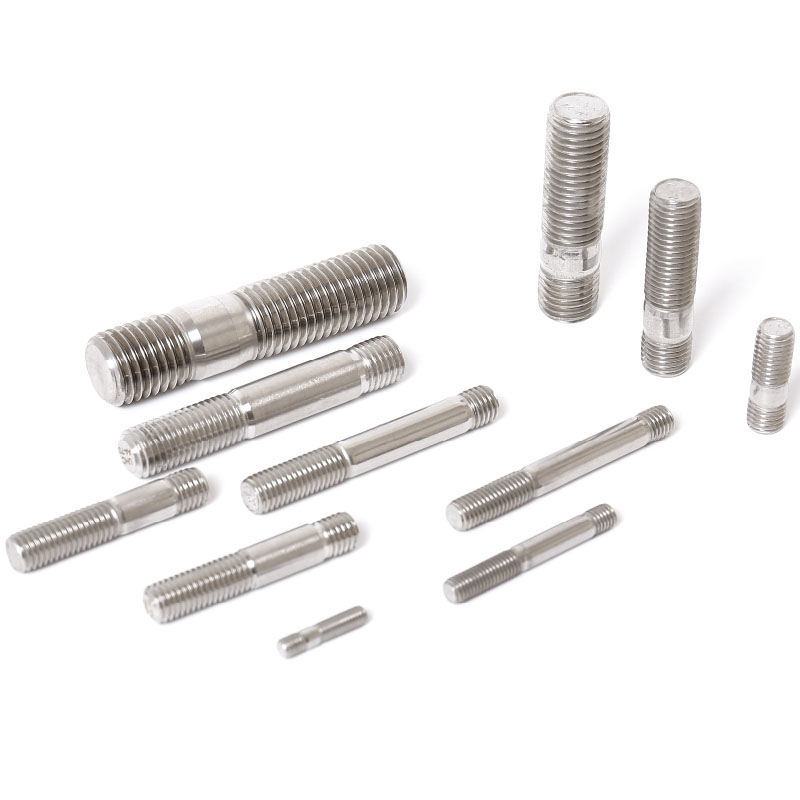
The Real Problem: Stainless Steel Is Not a Material Specification
Most fastener material failures are traceable to the purchase line, not to the plant. A bill of materials that reads stainless steel hex bolt, M16, leaves five decisions open — grade, property class, thread tolerance, surface finish and document set — and each one changes whether the part survives the application.
- Grade: A2 (304) and A4 (316) are both austenitic stainless, but they are not interchangeable in chloride-bearing or acidic service.
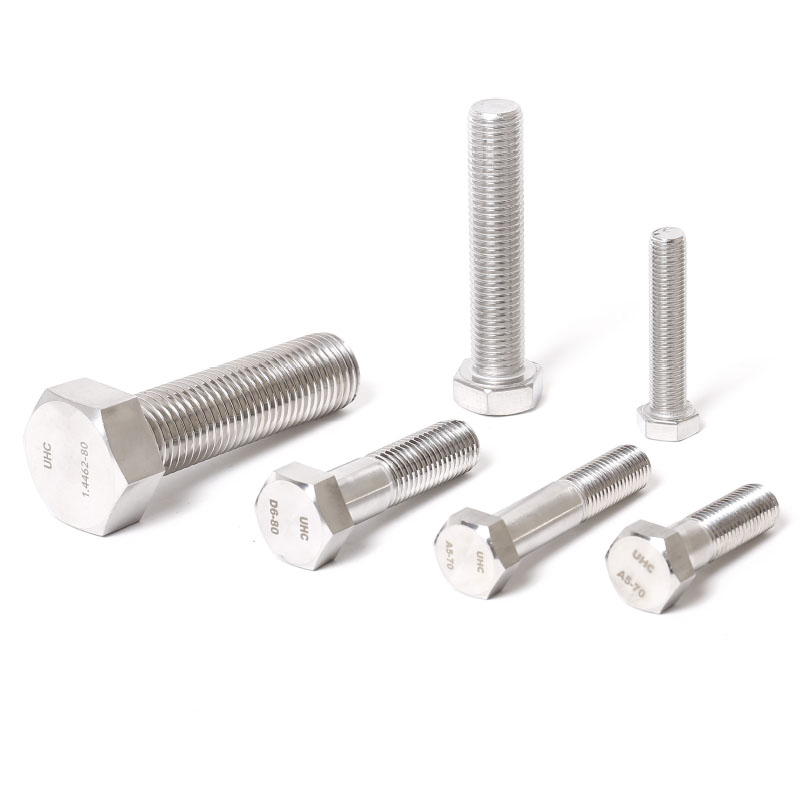
- Property class: A2-70, A4-80 and D6-100 are different strength classes, and the class available depends on the product form.
- Product form: bolts and nuts are quoted to D6-100, while threaded rods and studs are quoted to D6-80 and D6-70. A nut called out above the matching stud class is a mismatch on paper before it is a mismatch on site.
- Finish: natural finish, passivation, Dacromet coating and adhesive pre-coating solve different problems.
- Documentation: pressure, power and aerospace projects typically require a 3.1 material test certificate and batch traceability, which have to be agreed before production, not after.
UHC's published selection rule is deliberately narrow: for a general indoor environment, 304/316 stainless steel is preferred; for high-corrosion, offshore or marine environments, 316L, duplex steel or high-temperature alloy materials are recommended; for high-strength mechanical load scenarios, alloy steel fasteners are adopted. Material selection can be customised to the project working condition where the service environment falls between those bands.
Industry Background: Why Material Choice Is Under More Scrutiny
The industrial fastener market was valued at USD 103.9 billion in 2025 and is projected to reach USD 153.7 billion by 2033, according to Grand View Research. The same source puts Asia Pacific at a 45.1% revenue share in 2025, metal fasteners at 91.0% of the market, and externally threaded products — bolts and screws — at 48.1% of revenue. Growth is concentrated in the segments where material selection is hardest: the aerospace superalloy fastener market was valued at USD 776.7 million in 2024 (Fortune Business Insights), and the wind power fastener market is projected to reach USD 14.68 billion in 2025 (The Insight Partners).
Two structural drivers sit behind that demand. First, installed capacity. Global wind turbine capacity is projected to grow from 1,100 GW in 2025 to over 2,400 GW by 2030 (Global Wind Energy Council), and China's new shipbuilding orders rose 59.0% year-on-year in Q1 2024 (China Association of the National Shipbuilding Industry). Both sectors are defined by long service life in chloride-bearing conditions, which pushes specification toward duplex and higher alloys rather than 304. Second, acceptance discipline. Fasteners for pressure equipment in the EU must comply with the Pressure Equipment Directive (PED) 2014/68/EU; ISO 3506-1:2020 specifies mechanical properties for corrosion-resistant stainless steel bolts, screws and studs; EN 14399 governs high-strength structural bolting assemblies for preloading; and aerospace programmes work to AS9100 quality management requirements. A supplier's ability to document a material is now part of the material decision.
UHC's project activity concentrates on the EU, Korea and Japan, with exports running to the EU, U.S., Japan, Korea, Middle East and South America. The application scenarios described in this guide are common in Germany, Japan, South Korea and Italy, where pressure, marine and energy specifications tend to name both the grade and the acceptance document.
The Three Material Families
304 / 316 Austenitic Stainless Steel
304 and 316 are the default industrial stainless grades and cover the widest share of fastener demand: general indoor assembly, industrial machinery, medical and electronics equipment, telecommunications, rail transit, home appliances and construction and infrastructure. UHC quotes them as A2 classes (304) and A4 classes (316), with 1.4571 / 316Ti, 1.4539 / 904L and the super-austenitic 1.4529 / UNS N08926 available where the specification calls for a higher-alloy austenitic grade.
Their limit is environmental rather than mechanical. Where the working condition is seawater corrosion, acid and alkali exposure, or sustained high temperature combined with high tensile load, the specification should move up a family — which is why the same selection guidance recommends 316L, duplex or high-temperature alloy for marine and coastal salt-spray conditions.
Duplex Steel
Duplex grades — UNS S32205 / 1.4462 and, in the super duplex range, 1.4410 / UNS S32750 / 2507 — are the working answer for chloride-rich service that still has to carry load. Duplex is quoted in the D6 property classes: D6-80 and D6-100 on bolts and nuts, D6-70 and D6-80 on threaded rods and studs.
Duplex is not a universal upgrade. It earns its place where aqueous chloride corrosion and mechanical load act together — marine and offshore structures, coastal petrochemical plants and heavy structural connections. For dry indoor assembly it adds cost without adding service life.
Nickel-Based and High-Temperature Alloys
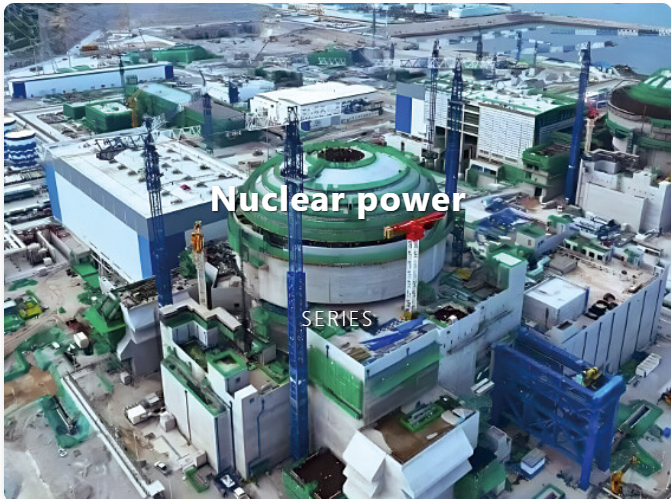
Nickel-based and high-temperature alloy fasteners, including Inconel and Hastelloy grades such as 1.4980, A286 ALLOY 660, 2.4952, 2.4668 / ALLOY 718 and ALLOY 80A, are specified where high temperature and high load occur together, or where the corrosion medium is aggressive enough that austenitic and duplex grades sit outside their approved envelope. Typical applications are power generation, aerospace, and petrochemical process equipment. In UHC's working-condition data these are the conditions described as high temperature, high tensile load and acid/alkali corrosive environment, with static fixed assembly under continuous mechanical load.
These materials carry the highest documentation burden. Aerospace programmes work to AS9100, pressure equipment to PED 2014/68/EU, and both expect certification that traces the heat and the batch. UHC issues a 3.1 material test certificate with these orders and maintains batch quality tracing through its ERP system.
Property Classes, Size Ranges and Standards by Product Form
The class available to you depends on which fastener you are buying. This is the table to check before the purchase order is written.
| Product form | Size range | Property classes offered | Thread tolerance | Standards executed |
|---|---|---|---|---|
| Bolts (hex, flange, T-bolt, U-bolt, heavy, fit, square, anchor, foundation) | M2 – M160; length 6 – 300 mm | A2-70, A2-80, A4-70, A4-80, D6-80, D6-100 | 6g / 2A | ISO, DIN, ASTM, ASME, ANSI, JIS |
| Nuts (hex, coupling, weld, flange, nylon, heavy, jam, castle, slot, self-locking) | M2 – M64 | A2-70, A2-80, A4-70, A4-80, D6-80, D6-100 | 6H / 2B / 3B | ISO, DIN, ASTM, ASME, ANSI, JIS |
| Threaded rods and studs (full thread rods, double end studs) | M5 – M160; effective length up to 5,000 mm | A2-50, A2-70, A4-50, A4-70, D6-70, D6-80 | 6g / 2A | ISO, DIN, ASTM, ASME, ANSI, JIS |
| Screws (tapping, marine, self-drilling, set, chipboard, socket cap, drywall) | M2 – M8; length 6 – 100 mm | A2-50, A2-70, A4-50, A4-70 | — | ISO, DIN, ASTM, ASME, ANSI, JIS |
| Washers (flat, heavy, toothed lock, serrated, wave) | M2.5 – M45 | Per material callout | — | ISO, DIN, ASTM, ASME, ANSI, JIS |
| Rivets and rivet nuts (open type, closed end type) | M3 – M6.4 | Materials: 304/316 stainless, 6061 / 7075 aluminium | — | ISO, DIN, ASME, ANSI, JIS |
Surface Treatments: Passivation, Dacromet and Adhesive Pre-Coating
Finish is the third variable, and on stainless it is often skipped. UHC offers four finishes across bolts, nuts, screws, threaded rods and studs: natural finish, passivation, Dacromet coating and adhesive pre-coating.
- Passivation is a chemical treatment that removes free iron and surface contamination so the stainless passive layer can re-form. It matters most after machining and on parts that will see moisture, and it is the finish to specify alongside 316 or duplex for marine and coastal work.
- Dacromet coating applies a zinc-aluminium based barrier layer where protection beyond the base material's own corrosion resistance is required.
- Adhesive pre-coating applies a pre-applied locking or sealing compound to the thread, so the anti-loosening function is built into the part instead of added on the assembly line — relevant where high vibration is a working condition.
- Natural finish remains the default for dry, controlled assembly, where a coating adds cost without a service benefit.
Comparison Table: 304/316 vs. Duplex vs. Nickel-Based Alloys
The table below compares the three families only on attributes supported by the current product data and the standards cited above. It is a shortlisting tool, not a substitute for the project specification.
| Attribute | 304 / 316 austenitic stainless | Duplex steel | Nickel-based and high-temperature alloys |
|---|---|---|---|
| Designations quoted by UHC | 304, 316, 1.4571 / 316Ti, 1.4539 / 904L, 1.4529 / UNS N08926 | UNS S32205 / 1.4462, 1.4410 / UNS S32750 / 2507 | 1.4980, A286 ALLOY 660, 2.4952, 2.4668 / ALLOY 718, ALLOY 80A; Inconel and Hastelloy grades |
| Property classes | A2-50, A2-70, A2-80, A4-50, A4-70, A4-80 | D6-70, D6-80, D6-100 | Quoted to project specification |
| Service conditions it is selected for | Normal temperature; general indoor and moderately corrosive service; static fixed assembly | Seawater and chloride exposure combined with high tensile load; marine, offshore and coastal process plant | High temperature combined with high tensile load; acid and alkali corrosive environment; continuous mechanical load |
| Industries served | Industrial machinery, medical and electronics, telecommunications, rail transit, construction and infrastructure, home appliances | Marine and offshore, petrochemical, power generation, construction and infrastructure | Petrochemical, power generation, aerospace |
| Surface treatments | Natural finish, passivation, Dacromet coating, adhesive pre-coating | Natural finish, passivation, Dacromet coating, adhesive pre-coating | Natural finish, passivation, Dacromet coating, adhesive pre-coating |
| Documentation | 3.1 material test certificate; first article, in-process and pre-shipment inspection; batch quality tracing | Same documentation set | Same documentation set, plus the certification route the PED or AS9100 programme requires |
Step-by-Step: Matching a Material to a Project
The sequence below is the one to follow when a buyer has a working condition rather than a finished specification. It runs from the environment inward to the purchase order.
- Write down the environment, not the material. Record the medium (seawater, acid or alkali, process gas, dry indoor), the temperature band, the load type (static fixed, high tensile, high vibration) and the cleaning regime. UHC's application data classifies working conditions as normal temperature, high temperature, seawater corrosion, acid and alkali corrosive environment, high vibration and high tensile load.
- Fix the acceptance standard first. Decide whether the line is quoted to ISO, DIN, ASTM, ASME, ANSI or JIS, and whether the project adds PED 2014/68/EU, EN 14399 or AS9100. The standard decides what can be certified, and certification limits which materials are usable.
- Choose the family against the environment. General indoor → 304/316. High-corrosion, offshore or marine → 316L, duplex or high-temperature alloy. High-strength mechanical load → alloy steel. Conditions between those bands get a customised selection against the stated working condition.
- Match the property class to the product form. A stud and the nut that goes onto it must be called out as a pair: studs are quoted to A2-50 / A2-70, A4-50 / A4-70 and D6-70 / D6-80, while nuts go to A2-80, A4-80 and D6-100. Specify the thread tolerance at the same time — 6g / 2A for external threads, 6H / 2B / 3B for internal threads.
- Select the finish. Passivation for stainless that will see moisture; Dacromet where a barrier coating is required; adhesive pre-coating where vibration is a working condition; natural finish for dry, controlled assembly.
- Agree the inspection and document set. Confirm first article inspection, in-process inspection, pre-shipment inspection, the 3.1 material test certificate and batch traceability before the order is released. UHC batches are traceable through the ERP system from raw material procurement to finished delivery.
Use Cases by Industry
Petrochemical
Petrochemical service is where the three families separate most clearly. Working conditions include acid and alkali corrosive environments and high temperature, combined with continuous mechanical load. The split is straightforward: 316 or duplex where chlorides dominate, nickel-based alloys where temperature and load together exceed what stainless will hold, and passivated finishes throughout to protect the passive layer after machining.
Power Generation
Power generation fastening has to hold high tensile load at high temperature while resisting corrosion in the same joint — flange bolting on turbine and process systems is the classic example. Nickel-based alloys cover the hot, loaded end; duplex and 316 cover cooling-water and structural connections. Because much of this equipment sits in the EU pressure regime, PED 2014/68/EU compliance and a 3.1 certificate are usually part of the line item rather than an afterthought.
Aerospace
Aerospace assembly runs under high tensile load and high temperature with corrosion resistance, and under a documentation regime rather than a purchasing preference. AS9100 quality management requirements apply to aerospace, space and defence organisations, and material certification has to trace back to the batch. The aerospace superalloy fastener market was valued at USD 776.7 million in 2024, which reflects how specialised this material set has become.
Marine and Offshore
Marine and offshore is the clearest duplex case: fixed assembly, seawater corrosion and high tensile load in the same connection. 316L and duplex are the recommended starting points for salt-spray conditions, with nickel-based alloys reserved for the high-temperature or highly aggressive sub-systems. Passivation should be specified with the material, not applied as a substitute for the wrong grade.
Industrial Machinery
Industrial machinery is broad enough that the correct answer is often mixed within one machine. High tensile strength, anti-fatigue performance and continuous mechanical load point to alloy grades on the load path, while 304/316 covers guarding, panels, brackets and general assembly at normal temperature. Specifying a single grade across the whole bill of materials is where cost and risk both move in the wrong direction.
Purchasing Terms and Acceptance Criteria
Material selection only holds if it survives procurement. UHC's standard commercial terms are OEM/ODM production with head mark and logo customisation, a minimum order quantity of 150 kg, lead time of 75–90 days, and monthly capacity of 500–1,000 tons. Exports go to the EU, U.S., Japan, Korea, Middle East and South America, and the company holds ISO 9001, ISO 14001, ISO 45001 and PED certification, supported by an independent laboratory equipped for dimensional and mechanical performance testing.
Lead time is the term buyers most often underestimate. The 75–90 day window covers production. A change of material family after the order is released — for example from A4-80 to D6-100 — restarts material procurement and re-qualification, not just machining. Material decisions therefore belong in the technical clarification stage, before the PO date is fixed.
Acceptance criteria should be written into the order as a checklist, not implied:
| Acceptance item | What to state in the purchase order |
|---|---|
| Standard and grade | The governing standard (ISO, DIN, ASTM, ASME, ANSI, JIS) plus the material designation — 316 / A4, duplex UNS S32205, or A286 ALLOY 660 |
| Property class | The class for each product form — A2-70, A4-80, D6-100 — and the matching nut class for stud and bolt assemblies |
| Thread tolerance | 6g / 2A for external threads; 6H / 2B / 3B for internal threads |
| Surface treatment | Natural finish, passivation, Dacromet coating or adhesive pre-coating |
| Material documentation | 3.1 material test certificate supplied with each batch |
| Inspection | First article inspection, in-process inspection, pre-shipment inspection |
| Traceability | Batch quality tracing from raw material to finished delivery, managed through the ERP system |
| Marking and customisation | Head mark and logo requirements where OEM/ODM supply applies |
The case for putting that list in writing shows up in service life rather than in unit price. UHC fasteners have been supplied for fastening assembly in aerospace parts, marine equipment, automotive chassis and power generation facilities for over 10 years, including a 100,000-piece programme for industrial equipment OEM manufacturers, engineering contractors, hardware distributors and new energy system suppliers in Germany, Italy, Korea and Japan. The reported result on that programme was reduced later maintenance replacement cost and stable project operation — an outcome that depends on the material being right the first time, because the replacement cost is paid at the maintenance window, not at the PO.

FAQ
Which standard should a stainless steel fastener order be quoted against — ISO 3506-1 or the project standard?
Usually both. ISO 3506-1:2020 specifies the mechanical properties for corrosion-resistant stainless steel bolts, screws and studs, which is the basis for property classes such as A2-70 and A4-80. The project standard — ISO, DIN, ASTM, ASME, ANSI or JIS — then fixes dimensions, tolerances and marking. Pressure equipment in the EU adds PED 2014/68/EU, structural preloaded bolting adds EN 14399, and aerospace programmes add AS9100. UHC quotes all six fastener standards and holds PED certification.
Can duplex and nickel-based alloy fasteners be supplied in the same size range as 304/316?
Yes, within the per-product ranges. Bolts run M2 to M160 with lengths of 6 to 300 mm, nuts M2 to M64, and threaded rods and studs M5 to M160 with effective lengths up to 5,000 mm. Duplex steel and nickel-based high-temperature alloys are available across bolts, nuts, threaded rods and studs, with full range fastener types and full size customization. Screws run M2 to M8, washers M2.5 to M45, and rivets M3 to M6.4, with 304/316 stainless or 6061/7075 aluminium for rivets.
What is the minimum order quantity, and what drives cost between the material families?
The minimum order quantity is 150 kg. Cost follows the material family, the property class, the size and the surface treatment rather than the quantity alone. Because material, finish and inspection all have to be confirmed before production starts, the technical clarification stage is where cost is effectively set: moving from A4-80 to D6-100 after the order is released changes the material route and the documentation set, not only the price.
Can I validate the material before committing to a full batch?
Yes. First article inspection is part of the standard quality control sequence, alongside in-process inspection and pre-shipment inspection, and the independent laboratory carries out dimensional and mechanical performance testing. A 3.1 material test certificate is supplied with the batch, and batch quality tracing covers the route from raw material procurement to finished delivery. Buyers introducing a new material family — duplex or nickel-based alloy replacing 304/316 — typically use that combination as the validation step before scaling to production volumes.
What lead time should I plan for, and how do I start a material enquiry?
Standard lead time is 75–90 days, with monthly capacity of 500–1,000 tons across five production bases. Because the material family, property class, finish and document set all have to be fixed before production, the fastest route is to send the working condition — medium, temperature band, load type and governing standard — rather than a part number on its own. The UHC engineering team will propose the material family and grade against that condition, and you can request a quote, a sample or the full product catalogue through the contact details below.
Conclusion
Material selection for high-performance fasteners reduces to a defensible sequence: state the working condition, fix the acceptance standard, choose the family, match the property class to the product form, select the finish, and agree the inspection and documentation set before the order is released. 304/316 austenitic stainless covers general and moderately corrosive service; duplex steel covers chloride-rich, high-load marine and offshore work; nickel-based and high-temperature alloys cover the high-temperature, high-load, aggressive-medium combinations. None of that sequence is new — but writing it down is what separates a fastening assembly that lasts from one that is replaced at the next maintenance window.
UHC fastener and hardware supplies all three families — plus titanium and aluminium alloys — in bolts, nuts, screws, threaded rods and studs, washers and rivets, with full range fastener types and full size customization, certified to ISO 9001, ISO 14001, ISO 45001 and PED, and quoted against ISO, DIN, ASTM, ASME, ANSI and JIS.
Next step: sample, quote or catalogue
Send the working condition and the governing standard, and UHC will come back with the material family, property class and documentation set for review. Download the full product catalogue or contact the export team directly.
Download the UHC product catalogue (PDF)
Email: sales@uhc-group.com.cn / michaelshen@uhc-group.com.cn | Tel / WhatsApp: +86 13575349247 | Website: www.jxuhc.com
Address: Jingrun Building, Xiuzhou District, Jiaxing City, Zhejiang Province, China
Have Questions or Need More Details?
Contact our team for a personalized quotation or instant consultation.
Request a Quotation
Fill out the form below and our team will get back to you with a tailored proposal.
WhatsApp Direct Chat
Prefer to chat in real-time? Message us on WhatsApp for instant assistance & quick answers.
- Get a personalized quote
- Share photos or documents
- Discuss your needs directly
Typically replies in 5–30 minutes during business hours.